
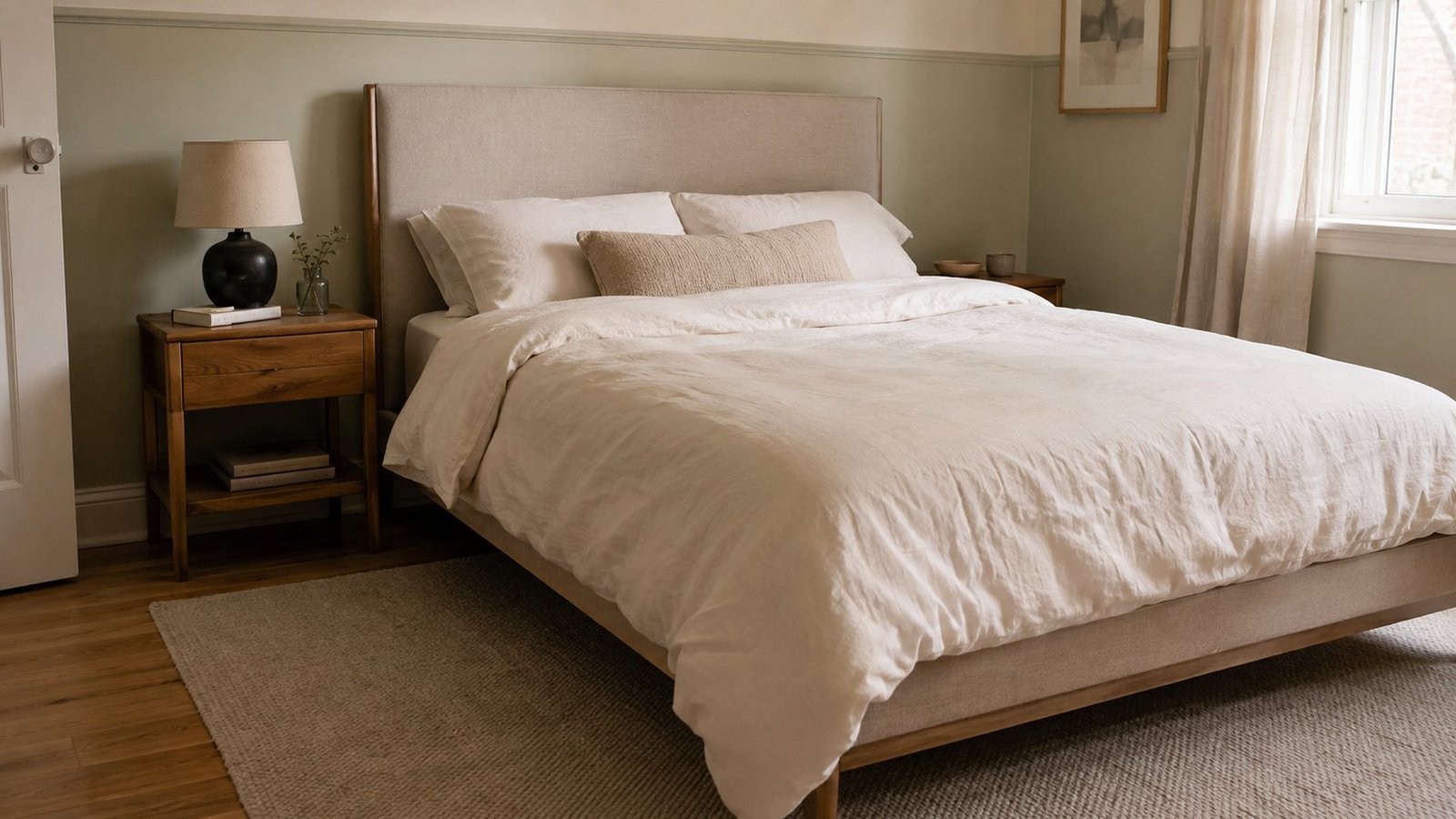
Freestanding headboard rental pick for a queen: choose a panel about 60 in (152 cm) wide that is held by the bed frame or by legs under the mattress, and skip wall bolts. Leave about 1–2 in (2.5–5 cm) of air behind the panel so paint and drywall stay untouched. This is bedroom hardware math for leases that ban drilling, not a DIY MDF wall build.
Key takeaways
- Match a queen bed with a freestanding headboard about 60 in (152 cm) wide. Wider “king look” panels crowd small rentals; narrower panels look unfinished.
- Skip wall bolts, lag screws, and peel-and-stick faux headboards that fail on textured paint. Prefer legs that tuck under the mattress or brackets that clamp to the frame.
- Stability rule: under-mattress legs need the mattress (and box spring if you use one) fully seated. Freestanding feet that do not go under the bed need a stance at least about 14 in (36 cm) deep or they tip when you sit up.
- Plan about 1–2 in (2.5–5 cm) of clear air between panel and wall so cords and baseboard stay free. Do not jam the panel flush if the wall is wavy.
- Calm panel height for most rentals: about 48–54 in (122–137 cm) from the floor. Tall hotel panels above 60 in (152 cm) steal ceiling in a low apartment.
- Pair with soft borders from the rug size under a queen bed guide, a shallow tiny nightstand, and quiet light from the rental lighting stack.
Why does a freestanding headboard matter in a rental bedroom?
Most leases treat wall bolts as damage. A bolted headboard leaves patched holes, scuffed paint, and a move-out argument. Peel-and-stick “headboard” sheets look temporary, lift on humid walls, and still risk finish damage when you peel them. A freestanding panel that the bed holds solves the soft backdrop problem without a drill.
Small bedrooms also punish wrong width. A queen mattress is about 60 in (152 cm) wide. A headboard that is 52 in looks like a guest-room leftover. A 72 in panel that was meant for a king crowds nightstands and the clothing rail path. Calm rental math starts at 60 in and stays there unless your platform is intentionally wider.
AdSense-safe kit only: tape measure, painter tape, the freestanding headboard, felt pads under feet if floors scratch, and the bed you already own. No wall anchors. No construction adhesive. Photograph the empty wall at move-in so you can prove the panel never touched drywall hardware.
Can you hang a headboard in a rental without damaging walls?
Yes, if “hang” means do not hang it on the wall. Keep the panel freestanding. Legs under the mattress or frame clamps do the work. The wall stays a backdrop with a slim air gap. That is the keep for deposit safety.
Skip anything that needs pilot holes into studs. Skip French cleats. Skip heavy Command strips sold as “headboard mounts” when the panel weighs more than a framed print; those strips are for art, not for a 40 lb board you lean on every night. If you want a soft vertical moment without a full headboard, lean one large piece with the no-nails approach in hang art without nails instead of faking a bolted panel.
When the lease is strict, write the plan down: freestanding only, felt pads, air gap, no adhesive. Landlords care about holes and sticky residue more than about a fabric panel that rolls out on moving day.
What is the best headboard for renters who cannot drill holes?
The best rental headboard is the one the bed holds, not the one the wall holds. Look for under-mattress legs, slip-cover style panels that sandwich between mattress and frame, or bolt-to-frame kits that use the metal bed brackets you already have. Those stay upright when you sit up against pillows.
Skip freestanding decorative screens that only rest on two skinny feet with no under-bed engagement. They look fine in product photos and tip the first week. Skip foam peel sheets. Skip nail-on wood planks. Keep the bedroom quiet with soft textiles and one measured panel, then free floor space with a clothing rail for a no-closet bedroom instead of a second dresser against the head wall.
Material keep list for rentals: light upholstered panels, simple wood boards with finished edges, and slipcovers you can wash. Material skip list: unfinished MDF that sheds dust, heavy solid slabs you cannot carry downstairs alone, and anything that needs wall French cleats “for safety.”
Will a freestanding headboard stay upright without wall bolts?
It will if the load path is honest. Under-mattress legs use the weight of the mattress (often about 50–100+ lb / 23–45+ kg depending on type) and the sleeper leaning back. Frame-clamp styles use the bed’s own steel or wood rails. Both are keeps.
It will not stay upright if the only support is a shallow freestanding foot with no under-bed bite. Tip test before you commit: sit up firmly against the pillows for ten seconds. If the panel walks toward the wall or lifts a foot, it fails. Add under-mattress engagement or return it. Do not “fix” a tippy panel with wall bolts you promised not to use.
Second check: side-to-side rock. Grab the top corners and nudge. A calm panel moves less than about ½ in (1 cm) at the top when the mattress is seated. More rock means loose legs or a width mismatch. Tighten hardware that came with the panel; do not invent wall screws.
How wide should a freestanding queen headboard be?
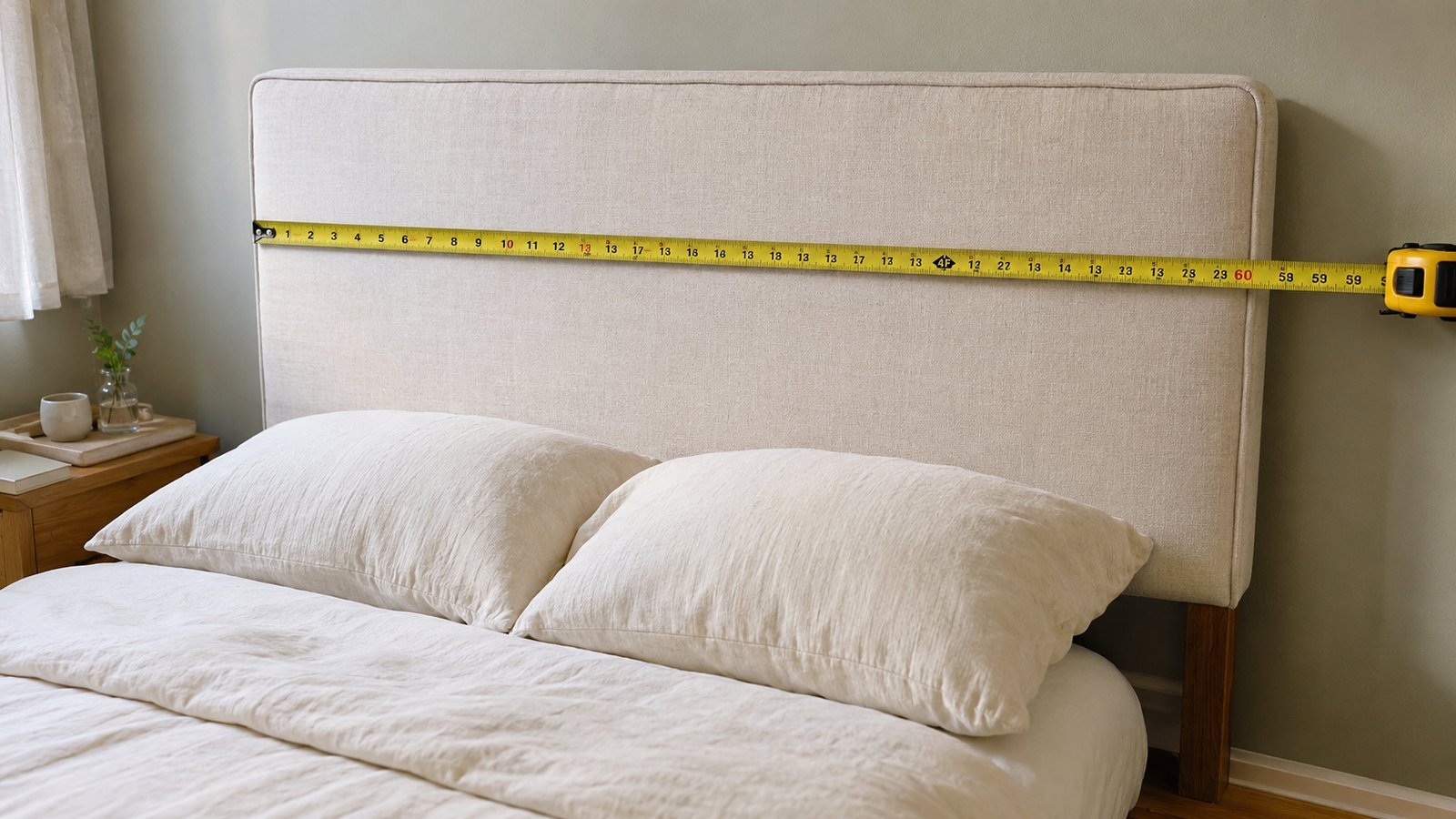
Aim for about 60 in (152 cm), matching a standard queen mattress. That is the original measured claim in this guide. A panel within about 58–62 in (147–157 cm) still reads correct. Under about 54 in (137 cm) looks skimpy. Over about 66 in (168 cm) starts to steal nightstand width in a small room.
Measure the mattress you sleep on, not the catalog photo. Platform edges and thick side rails can add an inch. If your platform is 62 in wide, a 60 in panel still usually works if it centers cleanly; a 62–64 in panel is a keep only when nightstands still clear drawers. Tape the planned width on the wall with painter tape before you buy so both nightstands still open.
Style the rest of the wall so width can breathe. Soft curtains hung high and wide from hang curtains high and wide pull the eye up. An 8×10 rug with about 18 in showing from the queen rug guide softens the floor so the 60 in panel does not feel like the only large object.
How much floor footprint does a freestanding headboard need behind the bed?
Plan two different footprints. Under-mattress legs usually need almost no extra floor beyond the bed: the legs tuck under, and you only leave about 1–2 in (2.5–5 cm) of air between the fabric or wood face and the wall so paint does not rub. That is the calm rental default.
True freestanding feet that sit on the floor behind the bed need depth. Keep a stance of at least about 14 in (36 cm) from the wall face of the panel back to the rear of the feet, or the panel tips when you sit up. Many small rentals cannot spare 14 in behind a queen. If your room is tight, skip freestanding-only feet and choose under-mattress legs instead.
Also measure the baseboard. A tall baseboard can force the panel face forward. Felt pads on feet protect wood floors. Do not let the panel grind baseboard paint; that is still deposit damage even without holes.
How tall should the panel be in a small rental?
Keep the top of the panel about 48–54 in (122–137 cm) from the floor for most queens with standard mattress height. That clears stacked pillows without a hotel tower look under an 8 ft (244 cm) ceiling. Panels that finish above about 60 in (152 cm) from the floor are a skip in low apartments unless the room is tall and empty.
Measure from the floor, not from the mattress top. Mattress thickness varies. Painter-tape a horizontal line at 52 in, sit on the bed, and check whether the tape still feels like a calm backdrop behind your head. Adjust before you order.
Soft light helps a mid-height panel feel finished. Use warm plugs from the rental lighting stack. Avoid cool overheads that make a fabric panel look dingy. Dark rooms can still read calm with tips from decorate a dark apartment.
How do you place a freestanding queen headboard in one weekend?
Saturday morning: clear the head wall. Photograph baseboards and paint. Measure mattress width (target about 60 in / 152 cm). Painter-tape the planned panel width and a 48–54 in height mark. Confirm both nightstands still open and the door swing is clear.
Saturday midday: assemble the panel on soft flooring. Attach under-mattress legs or frame brackets per the maker’s steps. Slide the legs under the mattress (or clamp to the frame). Center the panel on the queen. Leave 1–2 in of air to the wall. Add felt pads where feet meet the floor.
Saturday evening: sit-up tip test and side rock test. If the panel walks or rocks more than about ½ in at the top, reseat the mattress and tighten hardware. Style one lamp and one quiet object on each nightstand using the tiny nightstand guide. Soft curtains and a calm rug finish the room without more wall hardware.
Sunday daylight: photograph from the doorway so the 60 in width and the air gap read in the frame. If you see peel-and-stick sheets or empty bolt holes, restore the freestanding recipe. Keep circulation open with the clothing rail guide so laundry does not bury the side of the bed.
What should you keep, and what should you skip?
| Keep | Skip |
|---|---|
| ~60 in (152 cm) wide freestanding panel for a queen | 52 in skimpy panels or 72 in king leftovers in a small room |
| Under-mattress legs or frame clamps | Wall bolts, lag screws, French cleats |
| 1–2 in (2.5–5 cm) air gap to the wall | Jamming the panel flush against wavy paint |
| Sit-up tip test before styling pillows | Freestanding skinny feet with no under-bed bite |
| Panel top about 48–54 in (122–137 cm) from the floor | Hotel towers above ~60 in in low ceilings |
| Felt pads and move-in wall photos | Peel-and-stick faux headboard sheets |
| Pair with 8×10 rug border and shallow nightstands | Deep chests that block the 60 in story |
| Washable slipcovers / light upholstery | Heavy slabs you cannot move alone on lease end |
The keep list protects the deposit and the eye. Vendor pages that push wall-mount kits for “hotel stability” ignore rental rules. This guide optimizes for a 60 in freestanding panel you can tape, tip-test, and roll out on moving day.
How does this fit with the rest of a small rental bedroom?
A freestanding headboard is one spoke in a quiet bedroom cluster. Soft floor borders live in the queen rug guide. Storage without a closet lives in the clothing rail guide. Art without nails lives in the hang-art guide. Light without hardwiring lives in the rental lighting stack. Curtains without removing builder blinds live in layer sheer and blackout rental blinds.
Do not mix recipes. The headboard is about width and tip resistance. The rug is about 18 in side show. The rail is about a 36 in walkway. Keep each measured claim in its lane so the room stays calm instead of becoming a product collage.
Small-room tricks still help. A lighter textile panel can make the bed wall feel softer per make a small room look bigger. Optional peel-and-stick accent walls stay small and rental-safe via peel-and-stick wallpaper for small rentals; do not let a loud wall fight a calm oat headboard.
FAQ
Can you hang a headboard in a rental without damaging walls?
Yes if you keep it freestanding. Use under-mattress legs or frame clamps and leave about 1–2 in of air to the wall. Skip wall bolts, French cleats, and heavy adhesive mounts sold as headboard hardware.
What is the best headboard for renters who cannot drill holes?
Choose a panel the bed holds: under-mattress legs, slip-cover sandwich styles, or bolt-to-frame kits. Skip peel-and-stick sheets and freestanding screens with skinny feet and no under-bed engagement.
Will a freestanding headboard stay upright without wall bolts?
Yes when the mattress or frame carries the load. Do a sit-up tip test and a side rock test. If the top moves more than about ½ in or the feet walk, reseat the legs or return the panel. Do not add wall bolts to rescue a tippy design.
How wide should a freestanding queen headboard be?
About 60 in (152 cm), matching a standard queen mattress. Stay near 58–62 in. Under about 54 in looks skimpy; over about 66 in crowds nightstands in many small rentals.
How much floor footprint does a freestanding headboard need behind the bed?
Under-mattress legs need almost no extra floor beyond a 1–2 in air gap to the wall. True freestanding feet behind the bed need about 14 in (36 cm) of stance depth or they tip. In tight rooms, prefer under-mattress legs.
Related: clothing rail for a no-closet bedroom · rug size under a queen bed · hang art without nails · style a tiny nightstand · rental lighting stack · hang curtains high and wide · layer sheer and blackout rental blinds · make a small room look bigger · decorate a dark apartment · peel-and-stick wallpaper for small rentals