
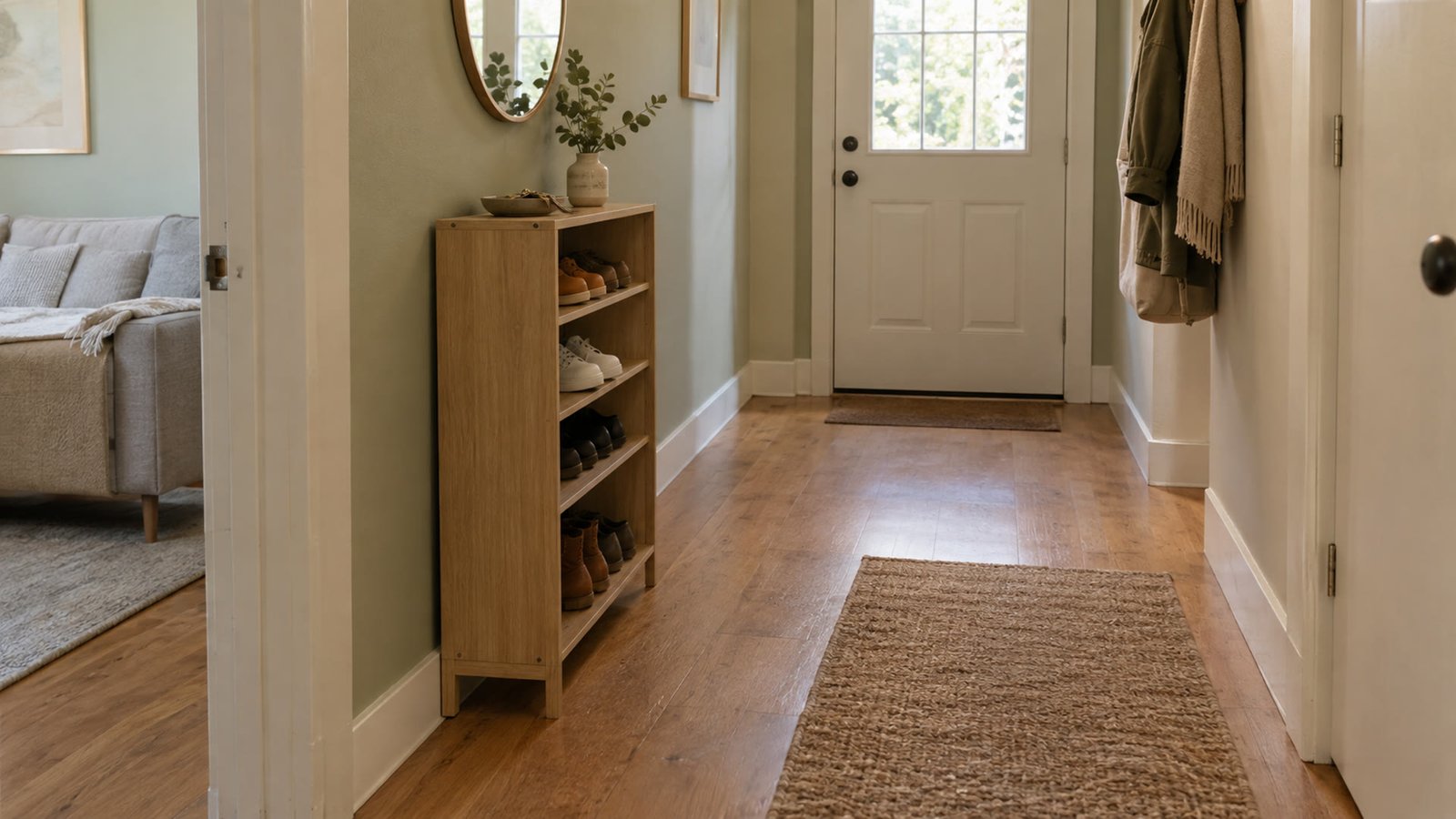
Slim shoe rack rental pick: keep freestanding shoe rack or slim cabinet depth at or under 10–12 in (25–30 cm) when the hallway allows, protect at least 36 in (91 cm) of clear walkway past the rack on the door path, skip deep cubby benches that pinch the hall, and use tip-out or over-door storage only when leftover depth sits under about 10 in (25 cm). Soft floor honesty (felt pads, trays, mats) protects vinyl and hardwood for move-out. This spoke owns shoe depth and walkway; coat lean geometry stays on its own guide.
Key takeaways
- For a calm shoe rack in a rental entry, keep freestanding depth at or under 10–12 in (25–30 cm) so pairs stay tidy without stealing the hall.
- Protect at least 36 in (91 cm) of clear walkway past the rack so bags, coats, and the door swing stay calm.
- Skip deep cubby benches that fail clearance. A deep seat that looks cute in a catalog often pinches a rental foyer under 40 in (102 cm) wide.
- Tip-out trays and over-door pockets are keep options only when leftover depth under the door or beside the wall sits under about 10 in (25 cm).
- Felt pads, a shallow tray, or a washable mat protect floors. Honesty beats scuffed vinyl at move-out.
- Entry kit context lives on small entryway no closet. Coat lean geometry lives on leaning coat rack entry rental. This spoke only owns shoe depth and walkway.
- Pair with bounce from make a small room look bigger, no-nail calm from hang art rental no nails, and shallow vertical storage from style a shallow bookshelf.
Why does a slim shoe rack matter for rental entries?
Small rental foyers rarely get a built-in closet or a wide mudroom bench. Shoes land in a pile beside the door, trip ankles, and leave grit on sealed floors. A freestanding slim shoe rack gives tiers without wall anchors or a deep seat. That matters when the lease treats drilled holes as damage and when you need a clear path for bags and move-out carts.
The measured job is depth and walkway, not shopping. A rack at or under 10–12 in (25–30 cm) deep reads calm. A deep cubby bench that eats 16–20 in (41–51 cm) can leave less than 36 in (91 cm) of walk in a typical apartment hall. This slim shoe rack rental recipe locks freestanding depth, door-path clearance, tip-out fallback, and soft floor protection so Search and AI overviews can cite a clean answer.
AdSense-safe kit only: tape measure, painter tape for a mock footprint, felt pads, a shallow tray or washable mat if grit is heavy, and the freestanding rack you already chose. No hammer drill. No toggle bolts for a hanging shoe tower. Photograph the bare floor before you place anything so move-out has a clean story.
Should renters keep freestanding shoe depth ≤10–12 in (25–30 cm)?
Yes for the freestanding rack and slim cabinet class this spoke covers. Keep depth at or under 10–12 in (25–30 cm) when the hallway allows. That band holds most daily sneakers and flats on open tiers without shoving the walk into the door swing. Deeper than about 12 in (30 cm) and you trade walkway for capacity you may not need at the door.
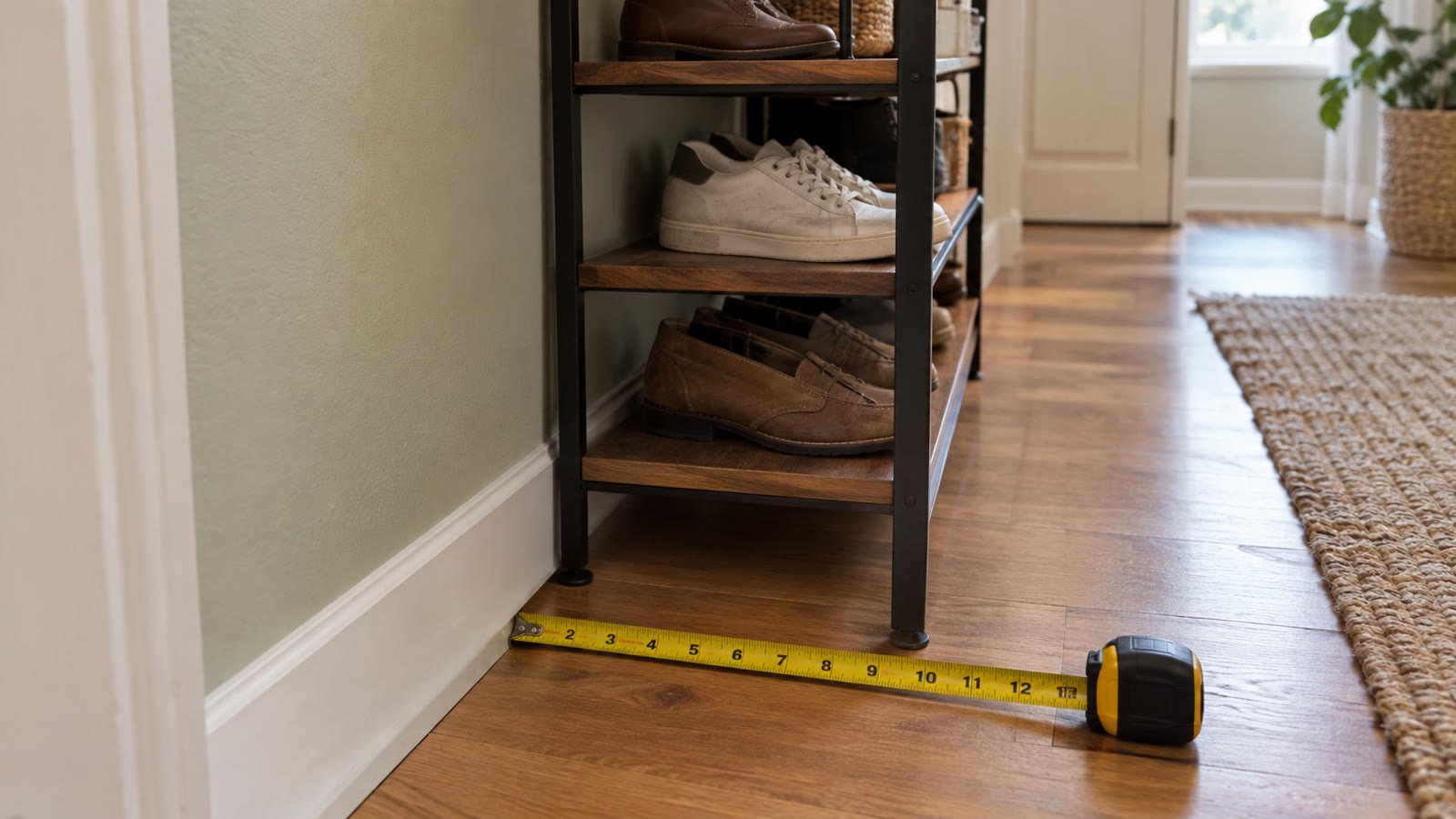
Work the math with the tape. Painter-tape a rectangle from the baseboard out to 10 in (25 cm) and to 12 in (30 cm). Stand the empty rack in that band. Soft-test the door fully open with a bag on your shoulder and watch whether heels hang into the path.
Soft sibling honesty: a leaning coat rack owns lean base geometry (about 13–15 in / 33–38 cm out from the wall) on leaning coat rack entry rental. Do not copy coat lean math onto shoe depth. Keep this spoke on shoe depth and the ≥36 in (91 cm) walkway past the rack.
How much clear walkway (≥36 in / 91 cm) should stay past a shoe rack?
Protect at least 36 in (91 cm) of clear walkway past the rack on the door path when the foyer allows it. That clearance keeps people, bags, and the door swing calm, and it leaves room for a coat lean nearby without a pinch point.
Measure hall width first. If the foyer is only 40 in (102 cm) wide, a 12 in (30 cm) deep rack leaves about 28 in (71 cm) if you park it wrong. Place the rack along the longest clear wall beside the door swing, not in the center of the walk.
In tighter halls under about 36 in (91 cm) total width, honesty beats cramming. Use tip-out trays, a single over-door pocket, or a two-tier slim rack under 10 in (25 cm) deep, and move overflow into bedroom shallow storage. Do not force a deep cubby bench into a hall that cannot protect the walk.
When should renters skip deep cubby benches?
Skip deep cubby benches whenever the seat-plus-cubby depth fails the ≥36 in (91 cm) walkway test, or whenever the bench blocks the door arc. Catalog benches often run 16–20 in (41–51 cm) deep with cubes that invite boots into the path. In a narrow rental foyer, that depth steals the calm walk.
Keep a shallow bench only when you can still tape ≥36 in (91 cm) of clear path and the seat depth stays near the 10–12 in (25–30 cm) band. Most small rentals fail that test. Prefer an open slim rack or a tip-out cabinet that hugs the wall. Soft trays help grit, but they do not invent walkway.
When do tip-out and over-door shoe options make sense?
Use tip-out trays or over-door pockets only when leftover depth under the door or beside the wall sits under about 10 in (25 cm). That is the fallback when a freestanding 10–12 in (25–30 cm) rack would leave less than 36 in (91 cm) of walk.
Tip-out cabinets that stay slim (≤10–12 in / 25–30 cm closed) can still be a keep if the walkway test passes. Over-door organizers help overflow on a closet door, but they are not a full entry station and they can stress hollow-core doors. Treat them as a soft add-on after the primary slim rack.
Skip drilling a wall-mounted shoe tower when the lease treats anchors as damage. Skip stacking crates that creep deeper than 12 in (30 cm). Soft honesty keeps the hall open.
How do you set a slim shoe rack in one weekend?
Saturday morning: clear the foyer floor. Photograph the bare baseboard. Measure door swing and hall width. Painter-tape the 10 in (25 cm) and 12 in (30 cm) depth lines. Confirm a ≥36 in (91 cm) walk path past the tape when possible.
Saturday midday: assemble the freestanding rack on cardboard so feet do not scuff. Add felt pads under every foot. Place a shallow tray under the lowest tier if grit is heavy. Stand the rack in the taped depth band along the calm side wall.
Saturday evening: load daily pairs only. Soft-test the door fully open with a bag on your shoulder. If heels hang into the path, nudge within the ≤10–12 in (25–30 cm) band, drop a tier, or move boots to tip-out or bedroom overflow.
Sunday daylight: vacuum the footprint. Style a coat lean only if both shoe walk and coat walk still clear. Photograph for the deposit file. Keep bedroom hanging rails on clothing rail no closet bedroom if overflow clothes belong in the sleeping zone.
Floor protection honesty for rentals (felt, tray, mat)
Felt pads under every foot are the baseline. Add a shallow waterproof tray under the lowest tier when rain is common. Add a washable mat only if it does not steal the ≥36 in (91 cm) walk.
Skip hidden floor cleats and carpet tape that pulls finish at move-out. Re-check pads every season. Shoe racks add grit and water, so trays matter. No-nail art hanging stays on hang art rental no nails when you add a small frame beside the entry wall.
How does this fit a small entryway layout?
Best keep: one slim freestanding rack ≤10–12 in (25–30 cm) deep on the calm side wall, ≥36 in (91 cm) clear walkway on the door path, and a coat lean on its own measured band if the foyer allows both. Soft wall finish options live on peel and stick wallpaper rental when you style the wall above the rack.
Skip twinning a deep cubby bench with a coat lean in the same narrow hall. Keep coats on the leaning coat rack guide and shoes on this slim depth recipe. A shallow bookshelf only belongs near the entry when depth still protects the walk; style notes live on style a shallow bookshelf.
Keys and mail need a small dish on a rack shelf if the product includes one, or on a shallow surface that does not need new holes. The parent entry kit stays on small entryway no closet.
What should you keep, and what should you skip?
| Keep | Skip |
|---|---|
| Freestanding shoe depth ≤10–12 in (25–30 cm) | Deep cubby benches that fail ≥36 in (91 cm) walkway |
| ≥36 in (91 cm) clear walkway past the rack on the door path | Parking the rack in the door swing or center of a narrow hall |
| Tip-out / over-door only when leftover depth is under ~10 in (25 cm) | Using over-door pockets as an excuse to ignore measured depth |
| Felt pads + shallow tray or washable mat for grit | Bare metal feet, dragging a loaded rack, staining tape |
| Daily pairs on the entry rack; seasonal overflow elsewhere | Letting the footprint creep deeper every week |
| Shoe depth + walkway only; coat lean on its own guide | Stealing coat lean geometry claims into shoe depth math |
| Move-in floor photos and reversible weekend setup | Drilled wall shoe towers when the lease hates anchors |
| Pair with entryway, coat-rack, bigger-room, hang-art, shallow-shelf guides | Product roundups and fake listicle shoe-rack shopping dumps |
The keep list protects the walk, the floor, and the deposit. Vendor pages that push deep benches ignore rental hall widths. This slim shoe rack rental guide optimizes for measured depth, walkway honesty, tip-out fallback, and a rack you can reverse on moving day.
How does this fit with other rental guides?
This spoke is about shoe depth and walkway: freestanding depth ≤10–12 in (25–30 cm), protect ≥36 in (91 cm) clear path, skip deep cubby benches, tip-out or over-door only under about 10 in (25 cm) leftover depth, and soft floor pads. Small entry kit planning lives in small-entryway-no-closet. Coat lean geometry lives in leaning-coat-rack-entry-rental. Bedroom hanging rails live in clothing-rail-no-closet-bedroom. Bounce lives in make-small-room-look-bigger-renter. No-nail art lives in hang-art-rental-no-nails. Soft wall finishes live in peel-and-stick-wallpaper-rental-small. Shallow vertical storage lives in style-shallow-bookshelf.
Do not mash claims. Keep freestanding shoe depth ≤10–12 in (25–30 cm), protect ≥36 in (91 cm) of walkway, skip deep benches, use tip-out or over-door only when leftover depth is under about 10 in (25 cm), and keep soft floor honesty so Search and AI overviews can cite a clean answer.
FAQ
How to Store Shoes in an Apartment Without an Entryway
Keep the same measured recipe beside the door wall even when there is no true foyer: freestanding depth ≤10–12 in (25–30 cm), protect ≥36 in (91 cm) of clear path when the room allows it, and skip deep cubby benches. If there is no entry wall, use the nearest calm wall and send overflow pairs to bedroom shallow storage. One slim station beats random piles under tables.
Do Shoe Racks Damage Apartment Floors?
They can if feet are bare metal, grit sits under the rack, or you drag a loaded unit. Soft honesty fixes most risk: felt pads under every foot, a shallow tray for wet soles, and a washable mat that does not steal the ≥36 in (91 cm) walk. Photograph floors at move-in, lift instead of drag, and re-check pads each season.
How to Maximize Shoe Storage in 2 Square Feet
Treat about 2 square feet as a slim vertical footprint at ≤10–12 in (25–30 cm) deep. Go up with tiers for daily pairs, add tip-out only when leftover depth is under about 10 in (25 cm), and park seasonal boots in bedroom overflow. Skip stacking a second deep crate in front of the rack that fails the ≥36 in (91 cm) walkway.
Should renters keep a slim shoe rack ≤10–12 in (25–30 cm) deep and protect ≥36 in (91 cm) walkway?
Yes. Keep freestanding depth at or under 10–12 in (25–30 cm) when the hallway allows, and protect at least 36 in (91 cm) of clear walkway past the rack on the door path. Painter-tape the depth band and the walk path first. Soft-test the door fully open with a bag on your shoulder before you call the layout done.
When should renters skip a deep cubby bench and choose tip-out or over-door shoe storage instead?
Skip a deep cubby bench whenever seat-plus-cubby depth fails the ≥36 in (91 cm) walkway test or blocks the door arc. Choose tip-out trays or over-door pockets when leftover depth under the door or beside the wall sits under about 10 in (25 cm), or when a freestanding 10–12 in (25–30 cm) rack would pinch the hall. Soft capacity without clearance is not a keep.
Related: small entryway no closet · leaning coat rack entry rental · clothing rail no closet bedroom · make a small room look bigger · hang art rental no nails · peel and stick wallpaper rental · style a shallow bookshelf