
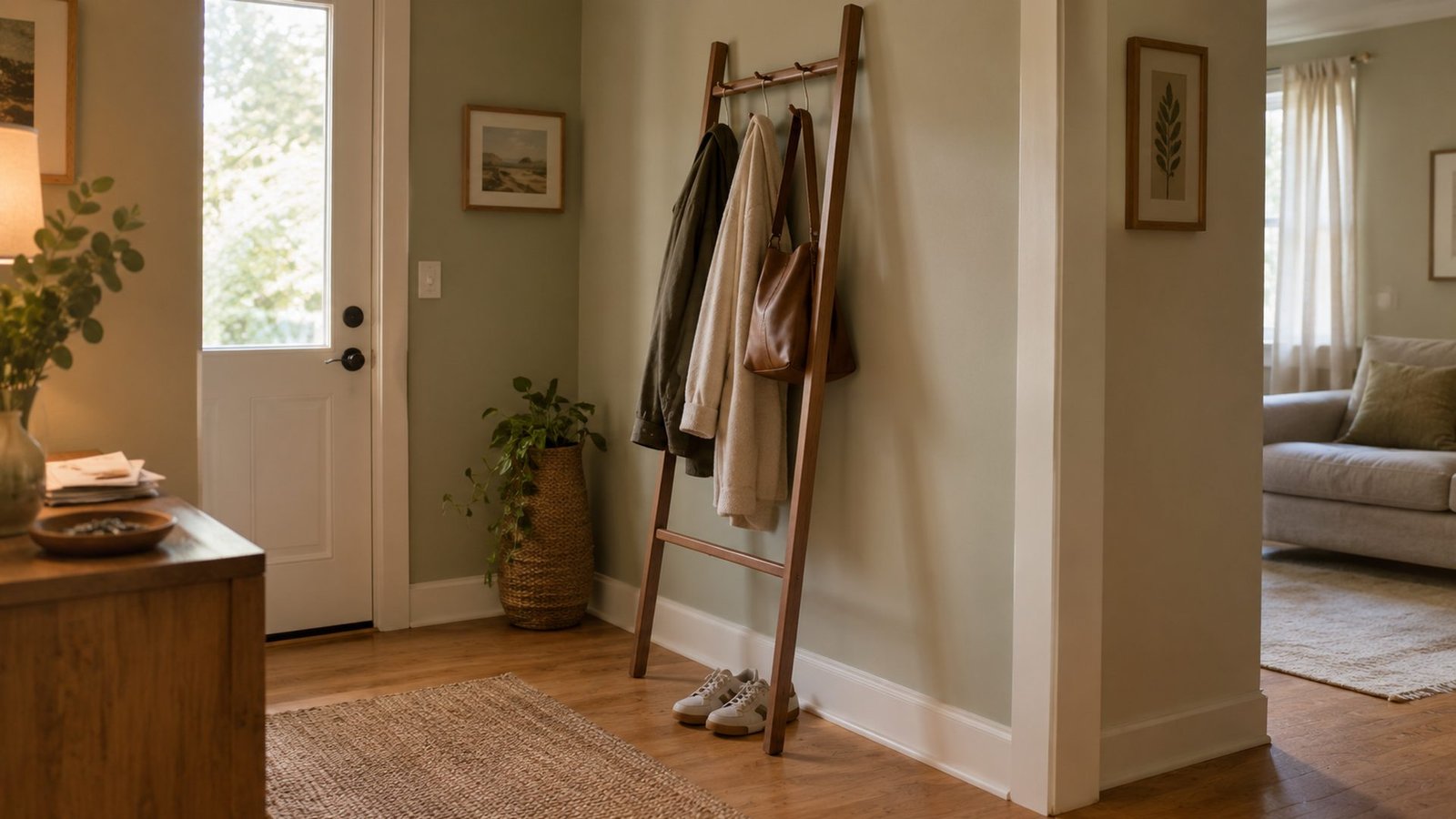
Leaning coat rack rental pick: keep a freestanding lean with the base about 13–15 in (33–38 cm) out from the wall for a calm tip-resistant standing coat / ladder rack class (~68 in / 173 cm tall), skip wall-mount drill when the lease treats anchors as damage, add soft anti-tip honesty (felt pads, museum putty/gel, or a lease-safe strap), and protect about 30–36 in (76–91 cm) of clear walkway past the rack in the entry path when the foyer allows it. This spoke owns entry lean coat geometry; bedroom hanging rails stay on their own guide.
Key takeaways
- For a calm coat rack in a rental entry, keep a freestanding lean with the base about 13–15 in (33–38 cm) out from the wall on a ~68 in (173 cm) tall standing coat / ladder rack class.
- Skip wall-mount drill and heavy anchors when the lease reads holes as damage. A lean rack leaves the plaster intact for move-out photos.
- Anti-tip honesty: felt pads under feet, museum putty or gel at the wall contact, or a lease-safe strap. Never pretend lean alone is childproof.
- Protect about 30–36 in (76–91 cm) of clear walkway past the rack when the foyer allows it so bags and coats do not pinch the door swing.
- Entry kit context lives on small entryway no closet. Bedroom hanging rails live on clothing rail no closet bedroom. This spoke only owns entry lean coat geometry.
- Pair with lean honesty from lean full length mirror rental, no-nail calm from hang art rental no nails, and bounce from make a small room look bigger.
Why does a leaning coat rack matter for rental entries?
Small rental foyers rarely get a built-in closet. Coats land on a chair, a doorknob, or a floor pile that trips everyone at the door. A freestanding leaning coat rack gives hooks and a rail without asking for wall anchors. That matters when the lease treats drilled holes as damage and when you want clean move-out photos.
The measured job is geometry, not shopping. A tall standing coat or ladder-style rack that leans with the base about 13–15 in (33–38 cm) out from the wall reads stable in a calm entry. A rack shoved flush tip-steeps and looks like it will walk. A rack parked in the middle of a 28 in (71 cm) hall pinches the path. This leaning coat rack rental recipe locks lean base, height class, walkway, and deposit-safe anti-tip so Search and AI overviews can cite a clean answer.
AdSense-safe kit only: tape measure, painter tape for a mock base outline, felt pads, museum putty or removable gel, optional lease-safe strap, and the freestanding rack you already chose. No hammer drill. No toggle bolts. No “temporary” anchors that leave cratered drywall. Photograph the bare wall before you lean anything so move-out has a clean story.
Should renters keep a 13–15 in (33–38 cm) lean base?
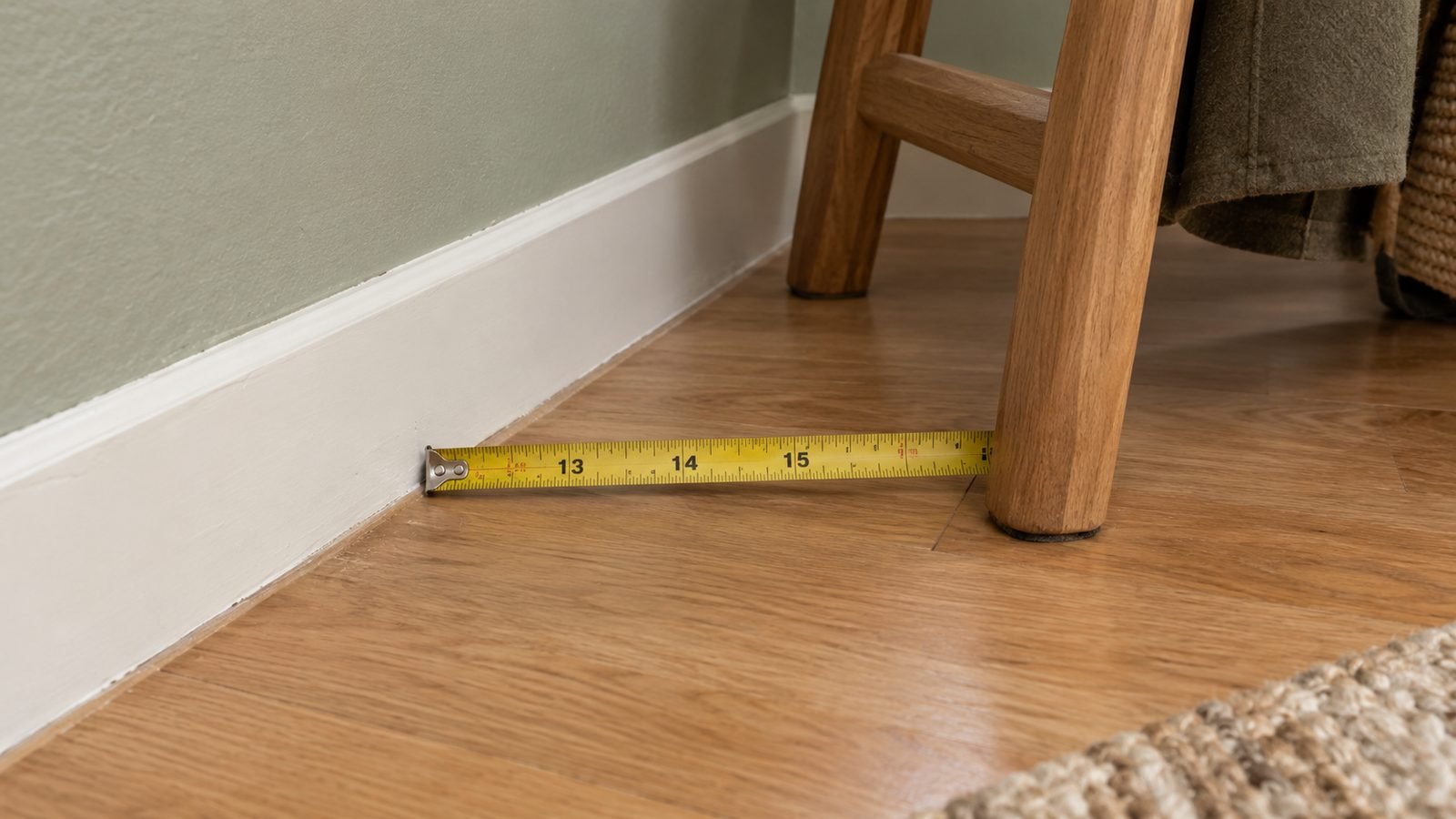
Yes for the standing coat / ladder rack class this spoke covers. Keep the base about 13–15 in (33–38 cm) out from the wall. That band matches the calm tip-resistant lean used on popular no-mount leaning racks about 68 in (173 cm) tall. Closer than about 13 in (33 cm) and the rack tip-steeps. Farther than about 15 in (38 cm) and the footprint steals walkway in a narrow foyer.
Work the math with the tape, not by eye. Painter-tape a rectangle on the floor from the baseboard out to 13 in (33 cm) and to 15 in (38 cm). Stand the empty rack in that band. Confirm the top contact lands on a calm wall zone (not a light switch, not a thermostat, not a soft peel-and-stick panel edge). Soft-test a coat on the highest hook and watch whether the base walks.
Soft sibling honesty: a leaning full-length mirror uses a much smaller base gap (about 3–6 in / 8–15 cm) because the mirror is a flat plane, not a coat-loaded ladder. Do not copy mirror lean math onto a coat rack. Keep mirror claims on lean full length mirror rental. Keep this spoke on coat lean geometry.
When should renters skip wall-mounted coat racks?
Skip wall-mount drill whenever the lease treats anchors, screws, or patched holes as damage, or whenever you do not want to patch and paint at move-out. Wall-mounted rails and heavy hook plates look tidy in catalogs, but they leave scars that landlords bill. A freestanding lean rack lifts off the wall on moving day and leaves the plaster looking like move-in photos.
Keep a wall mount only when the lease clearly allows hardware, you have written permission, or you already own a damage waiver that covers small anchors. Even then, this spoke still prefers the lean recipe for small entries because you can slide the rack for cleaning, vacuum the baseboard, and restyle the foyer without a second drill day.
Over-door hooks are a different tool. They can help a tiny closet door, but they are not a full entry coat station and they can stress hollow-core doors. Treat them as a soft add-on after you place the lean rack, not as a replacement for measured lean geometry.
What height should an entryway coat rack be?
For adult coats in a rental entry, keep a tall class near 68 in (173 cm), with a practical band about 65–72 in (165–183 cm) depending on the product. That height puts shoulders and hoods at a calm reach without forcing you to crouch, and it keeps long hems off the floor when the lean is honest.
Skip mini stands under about 48 in (122 cm) as your only entry station if winter coats are the daily load. Short poles dump coats onto the floor and steal walkway. Skip ceiling-high DIY poles that need drilled floor and ceiling plates. Those kits fight the deposit-safe goal.
Kids’ hooks can sit lower on the same rack if the product includes a mid rail. Do not add a second drilled child rail beside the lean rack. Keep the story reversible: one freestanding piece, measured lean, soft anti-tip.
Where should you place a coat rack in your entryway?
Best keep zone: along the longest clear wall beside the door swing, not behind the door and not in the center of the walk. Measure the door arc with painter tape. Place the rack so the lean base sits in the 13–15 in (33–38 cm) band and the coats hang outside the door’s full open path.
Protect about 30–36 in (76–91 cm) of clear walkway past the rack when the foyer allows it. If your hall is only 32 in (81 cm) wide, you may need the tighter end of the lean band, fewer coats, or a slimmer ladder profile. Honesty beats cramming four puffers into a pinch point.
Skip parking the rack in front of a breaker panel, thermostat, or sprinkler head. Skip leaning into a window film or peel-and-stick wallpaper edge that can scuff. Soft wall texture is fine; treat delicate surfaces with putty pads and a clean cloth contact point. Entry wallpaper tips stay on peel and stick wallpaper rental when you style the wall beside the rack.
How do you set a leaning coat rack in one weekend?
Saturday morning: clear the foyer floor. Photograph the bare wall and baseboard. Measure door swing and the intended wall length. Painter-tape the 13 in (33 cm) and 15 in (38 cm) lean lines. Confirm a ~30–36 in (76–91 cm) walk path past the tape when possible.
Saturday midday: assemble the freestanding rack on a rug or cardboard so feet do not scuff the finish. Add felt pads under every foot. Soft-clean the wall contact zone. Place museum putty or gel at the top contact if the product allows a padded touch. Stand the rack in the taped lean band.
Saturday evening: hang two mid-weight coats and one bag. Watch the base. If it walks toward the room, nudge the base slightly deeper in the 13–15 in (33–38 cm) band or add a lease-safe strap rated for furniture tip restraint. Soft-test the door open and closed with coats on the rack.
Sunday daylight: vacuum under the lean footprint. Style a shallow shoe line only if depth still protects the walk. Photograph from the door for your deposit file. Keep the bedroom clothing rail recipe on clothing rail no closet bedroom if overflow hanging belongs in the sleeping zone, not the entry.
Anti-tip honesty for renters (felt, putty, strap)
Lean geometry helps, but lean alone is not childproof and not pet-proof. Keep felt pads so feet do not skate on slick vinyl or sealed hardwood. Keep museum putty or removable gel at the wall contact so the top does not click and walk. Keep a lease-safe strap when kids climb or when the foyer gets slammed by a heavy winter load.
Skip drilling a “hidden” lag bolt through the upright into a stud and calling it temporary. Skip stacking bricks behind the base as a fake ballast that scuffs floors. Skip leaning the rack onto a nail already in the wall from a prior tenant. Soft honesty protects both ankles and the deposit.
Mirror the same soft language you use for other lean pieces. A full-length leaner uses putty and straps too; coat racks add hanging load, so re-check after storm-week coat piles. No-nail art hanging stays on hang art rental no nails when you add a calendar or small frame beside the rack.
How does this fit a small entryway layout?
Best keep: one tall lean rack on the calm side wall, a thin tray or mat for shoes that does not steal the 30–36 in (76–91 cm) path, and a soft light so the foyer does not feel like a closet cave. Bounce and scale tips live on make a small room look bigger.
Skip twinning this entry lean with a second bedroom-style clothing rail in the same foyer. That mash turns the door into a boutique aisle. If you need overflow hanging, put the rail in the bedroom per the clothing-rail guide and keep entry coats on the lean rack only.
A shallow bookshelf or console only belongs here when depth still protects the walk. Style notes for shallow vertical storage live on style a shallow bookshelf. Do not push a deep cubby bench against the lean base; that combo fails clearance and tip honesty.
Entry without a closet still needs a place for keys and mail. Keep those on a small dish on a shelf of the rack if the product includes one, or on a shallow wall-adjacent surface that does not need new holes. The parent entry kit stays on small entryway no closet.
What should you keep, and what should you skip?
| Keep | Skip |
|---|---|
| Lean base about 13–15 in (33–38 cm) out from the wall | Flush tip-steep lean or a base that steals the whole hall |
| ~68 in (173 cm) tall standing coat / ladder rack class (about 65–72 in / 165–183 cm) | Mini stands under ~48 in (122 cm) as the only adult coat station |
| Freestanding lean; skip wall-mount drill when leases treat anchors as damage | Toggle bolts, lag screws, and “temporary” anchors that crater drywall |
| Felt pads + museum putty/gel + optional lease-safe strap | Pretending lean alone is childproof |
| ~30–36 in (76–91 cm) clear walkway past the rack when possible | Parking the rack in the door swing or breaker-panel zone |
| Entry coat lean only; bedroom rails on their own guide | Stealing clothing-rail bedroom claims into the foyer |
| Move-in wall photos and reversible weekend setup | Hidden drilled ballast and brick stacks behind the base |
| Pair with entryway, lean-mirror, hang-art, bigger-room, shallow-shelf guides | Product roundups and fake listicle coat-rack shopping dumps |
The keep list protects the walk, the wall, and the deposit. Vendor pages that push universal wall mounts ignore rental inspections. This leaning coat rack rental guide optimizes for measured lean base, height class, walkway honesty, and a rack you can reverse on moving day.
How does this fit with other rental guides?
This spoke is about entry lean coat geometry: base about 13–15 in (33–38 cm) out from the wall, ~68 in (173 cm) tall class, skip wall-mount drill, soft anti-tip, and about 30–36 in (76–91 cm) walkway. Small entry kit planning lives in small-entryway-no-closet. Bedroom hanging rails live in clothing-rail-no-closet-bedroom. Lean mirror math lives in lean-full-length-mirror-rental. No-nail art lives in hang-art-rental-no-nails. Bounce and scale live in make-small-room-look-bigger-renter. Shallow vertical storage lives in style-shallow-bookshelf. Soft wall finish options live in peel-and-stick-wallpaper-rental-small.
Do not mash claims. The measured story here is simple on purpose: keep a 13–15 in (33–38 cm) lean base, keep ~68 in (173 cm) tall class, skip wall mounts when the lease hates holes, keep soft anti-tip honesty, protect about 30–36 in (76–91 cm) of walkway. Keep each claim in its lane so Search and AI overviews can cite a clean answer.
FAQ
Leaning Coat Racks vs Wall-Mounted: Which Is Better for Renters?
For most rentals, a freestanding leaning coat rack is the better keep when the lease treats anchors as damage. You get hooks and a rail with a 13–15 in (33–38 cm) lean base and you leave the wall intact for move-out. Keep a wall mount only with clear permission. Skip hidden drilled “temporary” anchors.
What Height Should an Entryway Coat Rack Be?
Keep a tall class near 68 in (173 cm), with a practical band about 65–72 in (165–183 cm) for adult coats. That height hangs shoulders cleanly without dumping hems on the floor when the lean is honest. Skip mini stands under about 48 in (122 cm) as your only entry station.
Where Should You Place a Coat Rack in Your Entryway?
Place it along the longest clear wall beside the door swing, with the base in the 13–15 in (33–38 cm) lean band and about 30–36 in (76–91 cm) of walkway past the rack when possible. Skip the door arc, breaker panels, and thermostat walls. Soft-test coats with the door fully open.
Should renters keep a 13–15 in (33–38 cm) lean base and skip wall mounts?
Yes. Keep the base about 13–15 in (33–38 cm) out from the wall for a calm tip-resistant ~68 in (173 cm) standing coat rack class, and skip wall-mount drill when the lease treats anchors as damage. Painter-tape the lean band first. Add felt pads and putty or a lease-safe strap for honesty.
How much clear walkway (30–36 in / 76–91 cm) should stay past a leaning coat rack?
Protect about 30–36 in (76–91 cm) of clear walkway past the rack when the foyer allows it so people, bags, and the door swing stay calm. In tighter halls, use the lean band carefully, hang fewer coats, and keep shoe storage shallow so the path does not pinch.
Related: small entryway no closet · clothing rail no closet bedroom · lean full length mirror rental · hang art rental no nails · make a small room look bigger · style a shallow bookshelf · peel and stick wallpaper rental