
No slip rug pad rental pick: cut the pad 1–2 in (2.5–5 cm) smaller than the rug on each side so about 0.5–1 in (1.3–2.5 cm) of rug edge hides the pad, keep felt + rubber (or natural rubber + felt) on hardwood and vinyl, and skip sticky PVC and aggressive double-sided tape that stain finishes and risk the deposit. This spoke owns pad trim and material keep/skip; living rug size and queen bed rug size own footprint math on their own guides.
Key takeaways
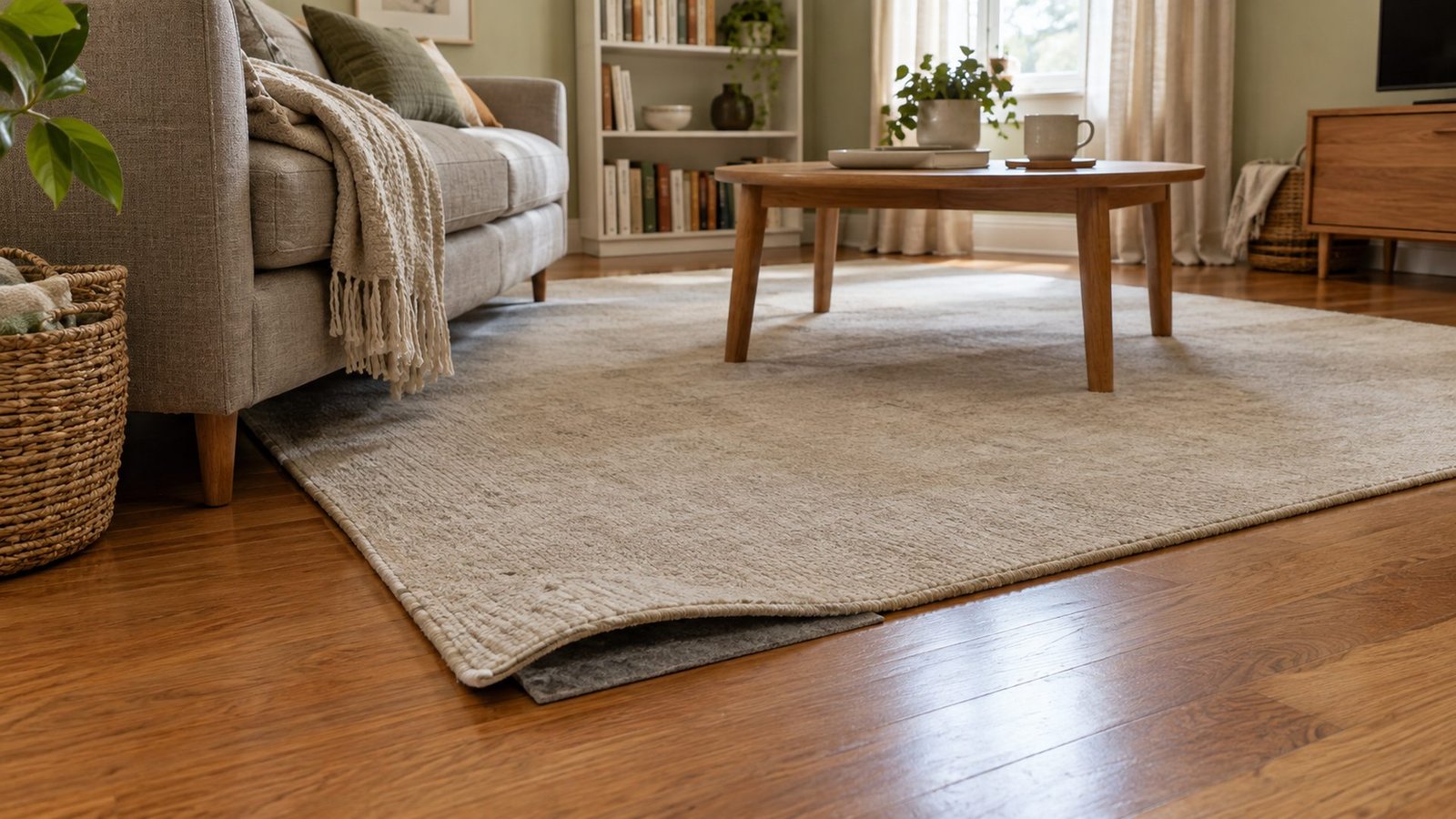
- For a calm rug pad under a rental living rug, cut the pad 1–2 in (2.5–5 cm) smaller than the rug on each side so the pad never peeks past the fringe.
- Keep felt + rubber or natural rubber + felt on hardwood and most vinyl. The felt faces the rug; the rubber grips the floor.
- Skip sticky PVC and aggressive double-sided tape that leave residue, stain finishes, and show up at move-out inspection.
- Thickness band for most living rugs: about 1/8–1/4 in (3–6 mm). Thicker memory-foam pads can telegraph under thin rugs. Keep vs skip with honesty.
- Rug footprint math stays on rug size for a small living room and rug size under a queen bed. This spoke owns pad trim and material.
- Pair with seating paths from arrange furniture in a small living room, sofa calm from warm grey rental sofa, and coffee-zone scale from storage ottoman coffee table.
Why does a no-slip rug pad matter for renters?
A living rug without a pad slides when someone turns a corner, sits hard on the sofa, or chases a pet across the room. That slide bunches the rug, trips ankles, and scuffs the finish under the pile. A good pad grips the floor, cushions footfall, and keeps the rug where you placed it after you measured the furniture line.
Renters have a second job: protect the deposit. Sticky PVC pads and cheap double-sided tape can leave yellow residue on hardwood and some vinyl. Landlords read that residue as damage even when the rest of the room looks calm. A felt + rubber pad that lifts cleanly is the rental-safe keep. Photograph the floor before and after you set the rug so move-out has a clean story.
AdSense-safe kit only: tape measure, painter tape for a mock pad outline, sharp scissors or a utility knife used on cardboard (not on the finished floor), the felt + rubber pad, and the rug you already sized. No glue guns. No permanent adhesive. No sanding the floor to “help grip.” This no slip rug pad rental recipe is reversible on moving day.
Is a non-slip rug pad really necessary for renters?
Yes in almost every rental living room with a hard floor. Hardwood, laminate, and many vinyl plank floors are slick enough that a wool or synthetic rug walks toward the sofa overnight. A pad stops that creep, softens the feel under bare feet, and reduces the scrub of rug backing against finish.
Skip the “just fold the corners under” fix. Folded corners telegraph as lumps, trip toes, and still slide. Skip stacking a second thin rug as a pad. That sandwich wrinkles and looks unfinished in doorway photos. Keep one purpose-built felt + rubber pad cut to the measured trim recipe below.
Carpeted bedrooms are different. A thick wall-to-wall underlay already grips. A thin rug on carpet often needs a rug-on-rug gripper or a light non-slip mesh, not a thick rubber pad that piles up under a bed walk. Be honest about the floor you have before you buy.
Should renters cut the rug pad 1–2 in (2.5–5 cm) smaller on each side?
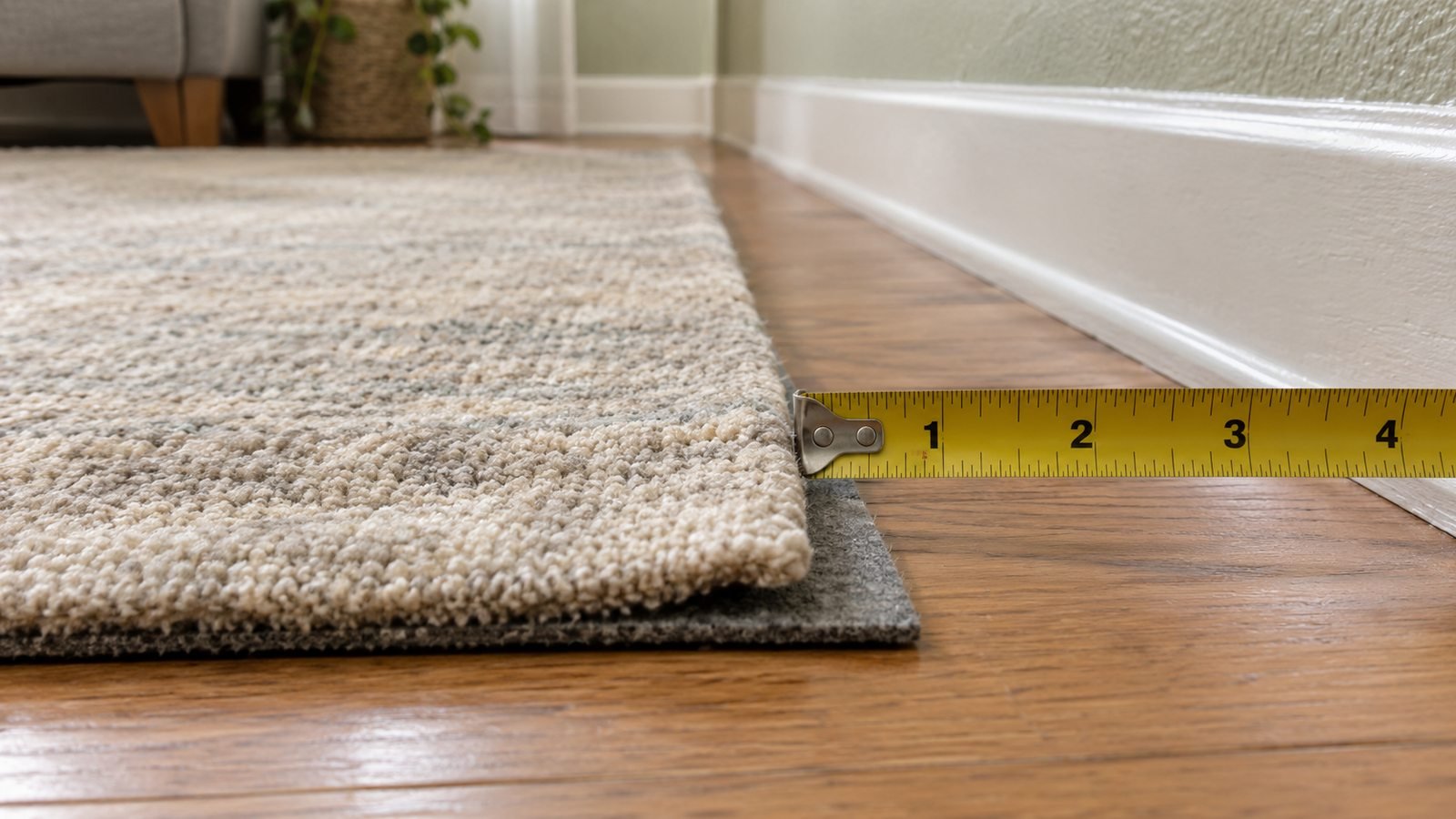
Yes. Cut the pad 1–2 in (2.5–5 cm) smaller than the rug on each side. After the rug lies flat, you should see about 0.5–1 in (1.3–2.5 cm) of rug edge beyond the pad, never a rubber lip sticking out past the fringe. A pad that shows looks unfinished and can catch socks or vacuum heads.
Work the math with the tape measure, not by eye. If the rug is 8 × 10 ft (244 × 305 cm), a calm pad target is about 7 ft 8 in–7 ft 10 in by 9 ft 8 in–9 ft 10 in (234–239 × 295–300 cm), depending on whether you take the 1 in or 2 in trim on each side. Painter-tape the pad outline on the floor first. Confirm the rug will cover every edge before you cut.
Never cut the finished floor. Never cut the pad while it sits on hardwood with the knife tip pointing down. Lay cardboard under the pad, mark with a soft pencil or chalk, and cut once. A ragged edge still hides under the rug if the trim is honest. A pad cut too large will peek forever.
Will a rug pad damage my apartment’s flooring?
A felt + rubber or natural rubber + felt pad, used clean and dry, is the keep for most hardwood and quality vinyl. The rubber grips without dissolving finish when you lift it for vacuuming. Felt cushions so the rug backing does not grind grit into the wood.
Damage risk rises with sticky PVC, latex-heavy cheap pads that break down in heat, and aggressive double-sided carpet tape. Those products can leave amber or gray residue that needs solvents landlords dislike. Some pads also trap moisture if a plant spills and nobody lifts the rug for weeks. Keep the pad dry. Lift and vacuum under it every few months.
Read your lease for floor-protection notes, but do not treat a pad as a free pass to drag furniture across wood. Felt pads under sofa and table legs still matter. Pair this pad recipe with furniture path math from arrange furniture in a small living room so chair legs land on the rug, not half on and half off.
When should renters skip sticky PVC rug pads on hardwood?
Skip sticky PVC on hardwood whenever the pad feels tacky, smells strongly of plasticizer, or markets itself as “grips like tape.” That stick often leaves residue after one summer of sun through the window. Skip double-sided carpet tape under the whole rug for the same reason. A few painter-tape temporary marks for layout are fine. Permanent adhesive under a living rug is a deposit risk.
Keep natural rubber + felt or a quality felt + rubber dual-surface pad instead. Orient the rubber toward the floor and the felt toward the rug back. If a product only offers PVC mesh, treat it as a skip for finished hardwood and look for a rubber-faced option. On some textured vinyl, test a small scrap in a closet corner overnight before you commit the whole living room.
This skip is the measured honesty competitors bury under “universal grip” copy. Deposit photos do not care about marketing claims. They care whether the finish under your rug still matches the rest of the floor.
How thick should a rug pad be?
For most rental living rugs, keep pad thickness about 1/8–1/4 in (3–6 mm). That band adds quiet underfoot without making thin rugs look puffy or making sofa front legs sit on a soft mound that rocks. Under about 1/8 in (3 mm) can feel like mesh alone and may not cushion grit. Over about 3/8–1/2 in (10–13 mm) memory-foam style pads often telegraph under flatweave or thin synthetic rugs.
Match thickness to the rug you own. A thick wool pile already softens the room; it needs grip more than cloud cushion. A thin flatweave needs the 1/8–1/4 in band so chairs do not catch a soft edge. Skip stacking two pads to fake thickness. That sandwich slides between layers.
Door clearance matters in small rentals. If the living rug sits near a swing door, a thick pad can make the door scrape. Measure door bottom to floor, then add rug pile plus pad. Keep a calm gap so the door clears. Soft light and a tidy rug edge also help the room read larger the way make a small room look bigger describes.
How do you measure and cut a rug pad in one weekend?
Saturday morning: clear the living zone. Photograph the bare floor. Measure the rug length and width in inches. Subtract 2–4 in (5–10 cm) from each dimension so each side loses 1–2 in (2.5–5 cm). Painter-tape that smaller rectangle on the floor. Lay the rug over the tape briefly to confirm every edge will hide the pad.
Saturday midday: unroll the pad on cardboard. Transfer the tape measurements with chalk or soft pencil. Cut with sharp scissors for light felt + rubber, or a utility knife with a straightedge for denser rubber, always cutting on cardboard. Vacuum pad scraps before they stick to socks.
Saturday evening: set the pad rubber-side down (felt toward the future rug). Center it on the tape marks. Unroll the rug from one short side so air bubbles push out. Smooth with clean hands. Check that no pad peeks. Soft-test the walk from sofa to kitchen pass.
Sunday daylight: vacuum with the beater brush off if your vacuum is aggressive. Sit on the sofa and confirm the front legs still land on the rug per your living recipe. Style the coffee zone with a calm storage ottoman coffee table so people are not kicking the rug edge all week. Photograph from the doorway for your deposit file.
Hardwood vs vinyl vs carpet: what changes?
Hardwood and engineered wood: keep felt + rubber, cut 1–2 in smaller on each side, skip sticky PVC. Wipe spills fast. Lift the pad if a humidifier or plant leaves a damp spot overnight.
Vinyl plank and quality sheet vinyl: the same felt + rubber keep usually works. Test a scrap if the vinyl is soft or heavily textured. Skip pads that claim chemical bond. Some cheap rubber smells transfer to soft vinyl; air the pad outside if it arrives with a strong odor.
Wall-to-wall carpet: skip a thick rubber pad under a decorative rug unless the maker sells a rug-on-rug mesh. A thick pad on carpet can create a sponge that walks and wrinkles. For bedrooms, size the decorative rug with rug size under a queen bed math first, then pick a thin gripper if the rug still creeps.
Living room layouts still need path honesty. Keep about 30–36 in (76–91 cm) where people pass when that is your arrange-furniture recipe. A pad that stops slip does not fix a rug that is too small for the sofa. Size first on rug size for a small living room, then trim the pad.
How does this fit a small living room layout?
Best keep zones: under a front-leg living rug in the sofa conversation area, and under a runner only when the runner is large enough that a trimmed pad still grips without peeking. Soft daylight plus a stable rug edge makes the room feel calmer next to a warm grey rental sofa.
Skip parking a thick pad under a rug that already fights a door swing. Skip letting the pad stick out near a media console where a vacuum or kid toy catches the rubber. TV walls and cord paths stay on their own guides; if you tidy wires near the rug, keep the pad edge clear of raceways from the live hide TV wires in a rental recipe when that wall shares the living floor.
Console and lamp zones sit beside the rug, not on a wrinkled pad lip. A shallow console behind the sofa from style a console behind a small sofa and a plug-in lamp from floor lamp behind sofa rental both need a flat floor path. A peeking pad edge trips that calm.
What should you keep, and what should you skip?
| Keep | Skip |
|---|---|
| Pad cut 1–2 in (2.5–5 cm) smaller on each side | Pad flush with or larger than the rug (peeking rubber) |
| Felt + rubber or natural rubber + felt on hardwood / vinyl | Sticky PVC and aggressive double-sided carpet tape |
| Thickness about 1/8–1/4 in (3–6 mm) for most living rugs | Thick memory-foam pads that telegraph under thin rugs |
| Rubber toward floor, felt toward rug back | Flipping the pad so sticky face ruins finish |
| Cut on cardboard with scissors or utility knife | Cutting on finished hardwood with the knife tip down |
| Move-in floor photos and dry, liftable pad care | Leaving spills trapped under the rug for weeks |
| Rug footprint math on living / queen size guides | Pretending this spoke replaces rug size recipes |
| Pair with arrange-furniture, sofa, ottoman, console, lamp guides | Stacking two pads or folding rug corners as a fake pad |
The keep list protects the finish, the walk, and the deposit. Vendor pages that push universal sticky PVC ignore rental inspections. This no slip rug pad rental guide optimizes for measured trim, felt + rubber honesty, thickness calm, and a pad you can reverse on moving day.
How does this fit with other rental living-room guides?
This spoke is about pad trim (1–2 in / 2.5–5 cm smaller on each side), felt + rubber keep, sticky PVC skip, thickness about 1/8–1/4 in (3–6 mm), and weekend cut steps. Living rug footprint lives in rug-size-small-living-room. Queen bed rug footprint lives in rug-size-under-queen-bed. Seating paths live in arrange-furniture-small-living-room. Coffee and ottoman scale live in storage-ottoman-coffee-table-rental. Sofa color calm lives in warm-grey-rental-sofa. Bounce and scale live in make-small-room-look-bigger-renter. Console depth lives in style-console-behind-sofa-small. Sofa-zone lamp math lives in floor-lamp-behind-sofa-rental. Optional TV wall wire tidy lives in hide-tv-wires-rental when that wall shares the living floor.
Do not mash claims. The measured story here is simple on purpose: cut the pad 1–2 in (2.5–5 cm) smaller on each side, keep felt + rubber on hardwood, skip sticky PVC and aggressive tape, keep about 1/8–1/4 in (3–6 mm) thickness for most living rugs. Keep each claim in its lane so Search and AI overviews can cite a clean answer.
FAQ
Is a Non-Slip Rug Pad Really Necessary for Renters?
Yes on most hard floors. Hardwood, laminate, and many vinyl floors let a living rug creep toward the sofa and scuff the finish. Keep a felt + rubber pad cut 1–2 in (2.5–5 cm) smaller on each side. Skip folded corners and stacking a second rug as a fake pad.
Will a Rug Pad Damage My Apartment’s Flooring?
A clean felt + rubber or natural rubber + felt pad is the keep for most hardwood and quality vinyl when you lift it dry and skip sticky products. Damage risk rises with sticky PVC, breaking-down latex pads, and aggressive double-sided tape that leave residue. Photograph the floor at move-in and keep spills from sitting under the rug.
How Thick Should a Rug Pad Be?
Keep about 1/8–1/4 in (3–6 mm) for most rental living rugs so you get grip and quiet without a puffy telegraph under thin rugs. Skip stacking pads and skip thick memory-foam cakes under flatweaves. Check door clearance if the rug sits near a swing door.
Should renters cut the rug pad 1–2 in (2.5–5 cm) smaller on each side?
Yes. Cut the pad 1–2 in (2.5–5 cm) smaller than the rug on each side so about 0.5–1 in (1.3–2.5 cm) of rug edge hides the pad. Painter-tape the outline first, cut on cardboard, and never leave rubber peeking past the fringe.
When should renters skip sticky PVC rug pads on hardwood?
Skip sticky PVC and aggressive double-sided carpet tape on hardwood whenever the pad feels tacky or markets permanent grip. Those products can stain finishes and risk the deposit. Keep felt + rubber or natural rubber + felt with rubber toward the floor instead.
Related: rug size for a small living room · rug size under a queen bed · arrange furniture in a small living room · storage ottoman coffee table · warm grey rental sofa · make a small room look bigger · style a console behind a small sofa · floor lamp behind sofa rental · hide TV wires in a rental · small living room ideas with a TV