
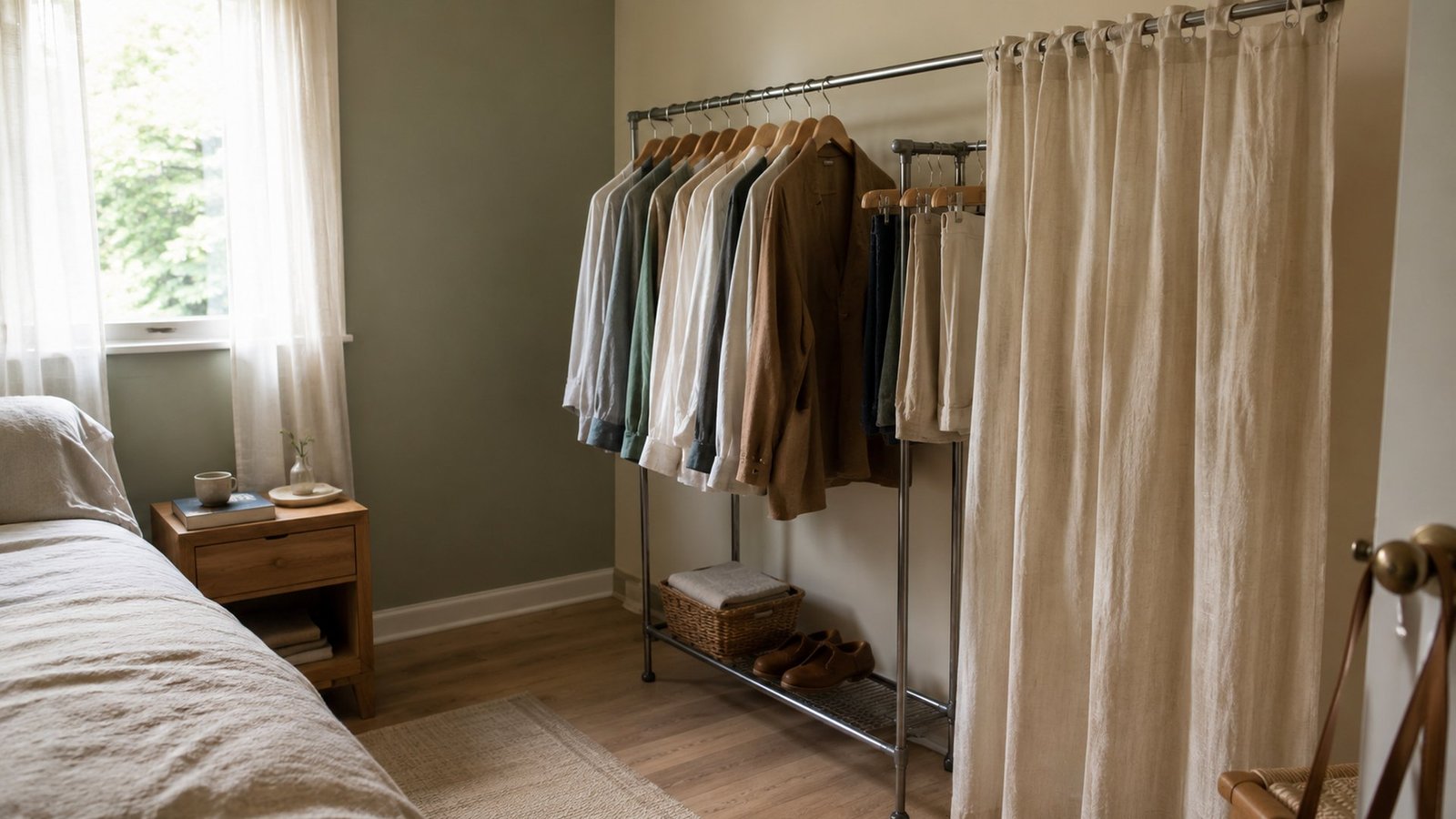
Skip the temporary dorm look. Put a freestanding clothing rail along the long wall, leave about 36 in (91 cm) of clear walkway in front, and hang a soft floor-length curtain about 4–6 in (10–15 cm) ahead of the rail so the hangers read as a closet, not a rack. Keep the longest garments about 1–2 in (2.5–5 cm) off the floor so hems stay clean on uneven rental slabs.
Key takeaways
- Use a freestanding rail when the lease forbids new wall holes. Skip drilled wall rails for this recipe.
- Leave about 36 in (91 cm) clear in front of the rail. Treat 30 in (76 cm) as the absolute side-path minimum.
- Hide the temporary look with a floor-length curtain about 4–6 in (10–15 cm) in front of the rail on a tension rod or freestanding track.
- Hang height so the longest garment clears the floor by about 1–2 in (2.5–5 cm).
- Stabilize long spans: a center foot on rails about 48 in (122 cm) or longer. Keep about 15–20 hangers per ~4 ft section.
- Park the rail along the long wall. Keep the door swing clear. Photograph floor and paint at move-in.
Why use a clothing rail when the bedroom has no closet?
Many small rentals ship without a real closet, or with a shallow builder closet that holds five shirts and a vacuum. A freestanding clothing rail gives you a full hang line without drilling into walls the landlord owns. You can move it when you rearrange the bed. You can take it with you at lease end. That is the rental advantage a built-in wardrobe cannot match when you are not allowed to remodel.
The rail only fails when it looks like a temporary fix: skinny chrome, overloaded hangers, clothes dragging the floor, and a walkway so tight you side-step every morning. This guide fixes those four failures with tape-measure rules, not mood boards. Keep the tone calm. Cream, wood, soft light. Pair the hang line with a quiet nightstand surface so the room does not feel like a fitting room. The live guide to style a tiny nightstand keeps the bedside stack honest while the rail handles clothes.
Skip wardrobe-install YMYL claims and contractor advice. This is furniture placement and soft covering for renters. AdSense-safe products only: freestanding rails, hangers, tension rods, curtains, felt pads, garment bags.
How do you hang clothes without a closet in a small bedroom?
Choose a freestanding rail with a wide, stable base. Place it along the long wall, usually opposite or beside the bed, never across the door path. Measure the wall run and leave room for the base feet. Leave the door arc empty so the door can open without kissing hangers. If the only free wall is short, prefer a shorter rail over a long one that crowds the bed or blocks a window.
Set hang height so dresses, coats, and long shirts clear the floor by about 1–2 in (2.5–5 cm). Dragging hems collect dust and trip socks on uneven slabs. Mid-calf floating looks like a shop display and wastes vertical hang space. Adjust the crossbar once with a tape, then stick to that line. Use matching slim hangers so shoulders sit at one height. Mix wood and plastic only if the wood set stays on the short coat stub.
Sort by weight. Put heavy coats and jeans on a short, sturdy section or a separate stub rail. Keep the main span for shirts, blouses, and light trousers. About 15–20 hangers per roughly 4 ft (122 cm) of bar keeps spacing readable and reduces sag. When the bar bows, you are over weight, not under style. Fold bulky knits into a shallow bin under the rail or into a storage ottoman elsewhere in the apartment rather than stretching the hang line. For living-room overflow that is not clothes, the storage ottoman vs coffee table guide keeps lids quiet and deposit-safe.
How much walking space do you need in front of a freestanding clothes rail?
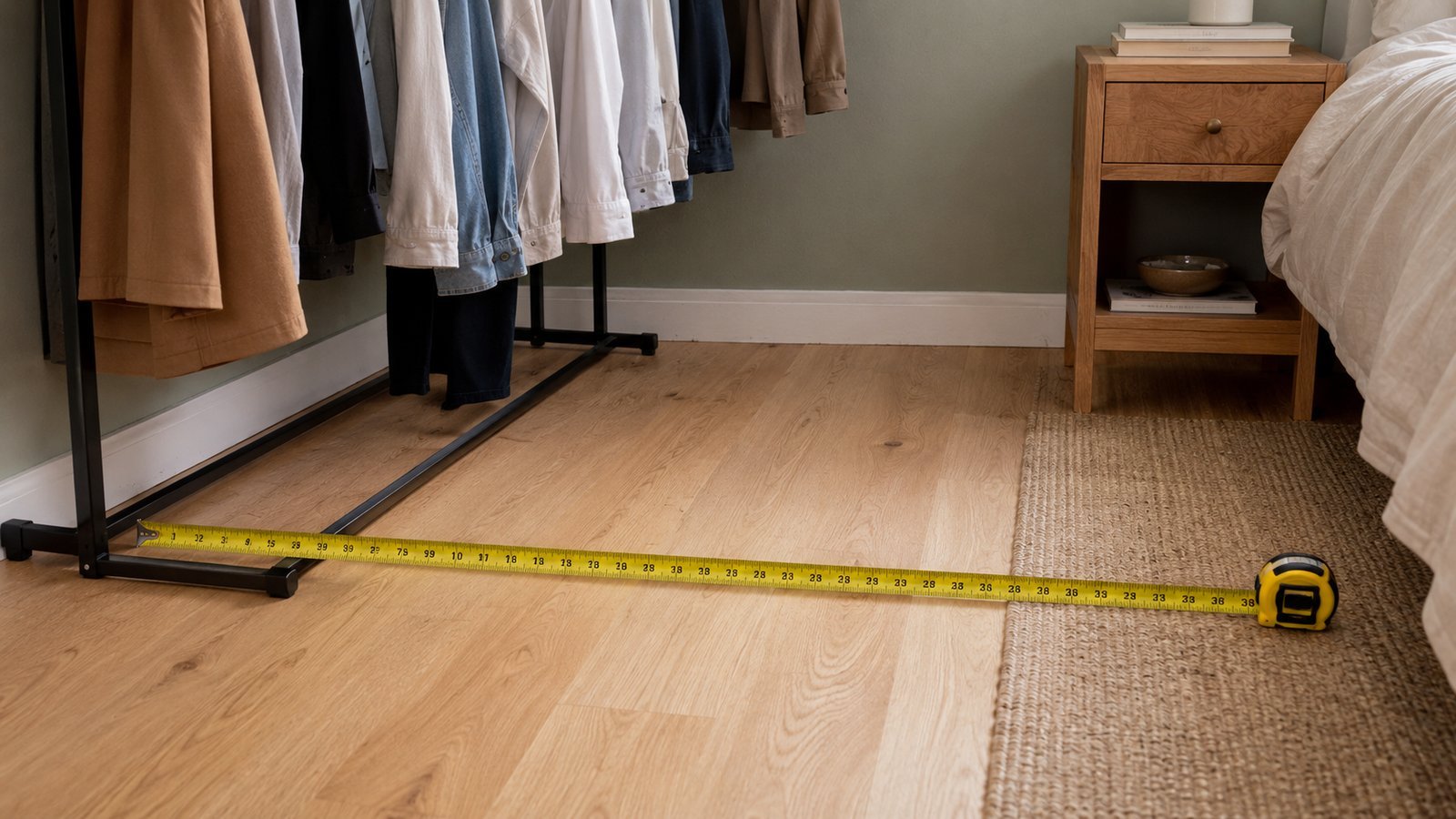
Plan on about 36 in (91 cm) of clear floor from the hanging face of the clothes to the next obstacle (bed edge, dresser, or wall). That is the measured claim this guide centers on. Thirty-six inches lets you stand, pull a hanger, and turn without hip-checking the mattress. Treat 30 in (76 cm) as the absolute minimum for a side path you only use sideways. Below 30 in, the rail becomes a daily obstacle and you will hate it by week two.
Tape it before you buy. Stand where the clothes will hang, not where the empty bar sits. Full hangers add depth. A coat on a hanger can eat 2–4 in (5–10 cm) beyond the bar. Measure from the expected garment face to the bed. If you only have 28 in (71 cm), shorten the rail plan, flip the bed, or park the rail in a corner nook that already has a longer pass-through. Do not steal the only clear path to the bathroom.
Studios can borrow the same walkway math when the rail doubles as a soft zone edge. Keep the hang line from becoming a second wall that chops the room. Zoning without a hard divider still needs one honest path, as in the live guide to zone a studio without a divider.
Do clothes rails wobble, and how do you keep them stable?
Yes, cheap rails wobble when the base is narrow, the bar is long, and the load is heavy on one end. Stability is geometry, not hope. Prefer a rail with a low, wide footprint and a center support foot once the bar is about 48 in (122 cm) or longer. Skip top-heavy poles that rely on a tiny X-base. If the lease allows only freestanding pieces, do not solve wobble by screwing the uprights into drywall.
Load evenly. Do not park every coat on the far left. Alternate heavy and light. Tighten the set screws on adjustable uprights after you set height. Add felt pads under metal feet so the rail does not skate on hard floors when you yank a jacket. On slick vinyl, a thin non-slip rug runner under the feet can help if it does not eat your 36 in walkway. Keep kids and pets from using the bar as a gym; one hard tug on an overloaded rail is how freestanding frames tip.
If the rail still shimmies after a center foot and even loading, the span is too long for the frame. Split into two shorter rails, or drop length. Two calm 36 in rails often beat one shaky 72 in bar in a rental bedroom.
How far should hanging garments clear the floor?
Aim for about 1–2 in (2.5–5 cm) of clear air under the longest hem. That clearance keeps fabric off dusty slabs and still uses most of the vertical hang. Measure with shoes you actually wear in the apartment, then set the bar once. Re-check after humidity swings if the bar is wood or if adjustable locks slip.
Floor-length curtains used to hide the rail should follow the same float idea as window panels: about a ½ in (1–1.5 cm) float is fine for the curtain face so it does not mop the floor, while garments behind stay at 1–2 in. Do not puddle either layer in a small bedroom. Uneven rental floors make puddles look messy within a week.
When the only rail height that clears the floor also blocks a window, shift the rail along the wall rather than raising clothes into the light. Soft daylight still matters in small rooms; the same instinct as when you decorate a dark apartment as a renter.
Should you hide a clothing rail with a curtain?
Yes, if you want the room to read finished. A bare chrome rail full of mixed hangers reads temporary even when the walkway math is perfect. Hang a floor-length curtain about 4–6 in (10–15 cm) in front of the rail on a tension rod between walls, on a freestanding track, or on a light curtain wire that needs no new wall anchors beyond what your lease already allows. Leave a hand-width gap so you can step in, slide hangers, and step out without crushing clothes.
Choose cream, soft linen, or warm grey fabric that matches the bedding story. Avoid shiny plastic shower curtains. Avoid heavy blackout on the rail hide unless you also need light control there; a light drape keeps the closet soft and the room brighter. Part the curtain for daytime access. Close it when guests see the bedroom. The hide is visual, not airtight storage.
If a tension rod will not span cleanly, a second freestanding curtain frame in front of the rail works when both footprints still leave your 36 in (91 cm) walkway to the bed. Never steal the walkway to buy the hide. Walkway first, curtain second.
Where should the rail sit relative to the bed, door, and windows?
Long wall first. Door clearance second. Window third. Keep the rail out of the door swing. Leave enough room to open drawers on any dresser that shares the wall. If the bed is a platform with under-bed bins, do not park the rail where bins pull out into the hangers. Align the rail so the curtain face, when closed, looks like a calm wall panel rather than a zigzag of clothes.
Small bedrooms already fight visual noise. One rail language is enough: one metal finish, one hanger type on the main bar, one curtain color. Art on the opposite wall can stay quiet and nail-free with the live hang art without nails approach so you are not drilling above the rail. Entry overflow coats can live near the door with ideas from small entryway no closet rather than stuffing every jacket onto the bedroom bar.
Lighting should flatter the curtain face, not spotlight every hanger gap. A simple lamp stack elsewhere in the apartment keeps ceiling wiring untouched; see the rental lighting stack. Warm-grey bedding and a calm sofa elsewhere help the bedroom feel intentional when the rail is new; the warm-grey rental sofa note is for living rooms, but the same soft grey family works on curtain fabric here.
What should you keep, and what should you skip?
| Keep | Skip |
|---|---|
| Freestanding rail with a wide base | Drilled wall rails when the lease forbids new holes |
| About 36 in (91 cm) clear walkway in front | Sub-30 in (76 cm) paths that force a side shuffle |
| Center foot on spans about 48 in (122 cm)+ | Top-heavy skinny poles that tip when yanked |
| 1–2 in (2.5–5 cm) hem clearance off the floor | Dragging hems or mid-calf display floats |
| Curtain hide 4–6 in (10–15 cm) in front | Bare chrome overloaded with mixed hangers |
| About 15–20 hangers per ~4 ft section | Packing the bar until it bows |
| Long-wall placement; door swing clear | Blocking the only path to the bathroom |
| Matching slim hangers; even weight | Contractor closet gut-jobs and YMYL remodel claims |
Photograph the empty wall, floor finish, and any existing hooks before you place the rail. There is no honest zero-scuff promise on every rental finish, but freestanding gear and felt pads cut the risk list.
What does a weekend clothing-rail plan look like?
Saturday morning: empty the floor path. Tape a 36 in (91 cm) walkway from the planned garment face to the bed. Measure wall length, door swing, and window clearance in inches and centimeters. Decide freestanding only. Sketch where a curtain rod could sit 4–6 in (10–15 cm) in front without eating the walkway.
Saturday midday: assemble the rail. Add the center foot if the span is about 48 in (122 cm) or longer. Set bar height for 1–2 in (2.5–5 cm) hem clearance. Load about 15–20 hangers per ~4 ft with even weight. Hang the curtain hide. Walk the path with a laundry basket to confirm mornings will feel calm.
Saturday evening: live-test. Pull three outfits. Close the curtain. Open it. Check wobble when you tug a coat. If the bar bows or the path feels tight, remove hangers or shorten the plan before Sunday. Sunday daylight: photograph from the door and from the bed so the 36 in claim reads in the frame. If you see dragging hems, a blocked door, or a bare overloaded chrome rack, restore the recipe: freestanding, 36 in clear, 1–2 in hem float, curtain hide 4–6 in ahead, even load.
Keep the rest of the room from fighting the rail. Furniture paths stay clear the way you arrange furniture in a small living room, even when the work is in the bedroom. Soft window light still helps; layered sheers elsewhere in the apartment follow the morning guide to layer sheer and blackout over builder blinds. A quiet rug under the bed zone can stop the eye once, similar to rug size for a small living room, as long as it does not eat the rail walkway.
FAQ
How to hang clothes without a closet?
Use a freestanding clothing rail along the long wall. Leave about 36 in (91 cm) clear in front. Set the bar so hems clear the floor by about 1–2 in (2.5–5 cm). Hide the temporary look with a floor-length curtain about 4–6 in (10–15 cm) ahead of the rail. Keep loads to about 15–20 hangers per ~4 ft section and skip drilled wall rails when the lease forbids new holes.
Do clothes rails wobble? How to keep them stable?
They wobble when the base is narrow, the span is long, and weight sits on one end. Choose a wide-base freestanding frame. Add a center foot on bars about 48 in (122 cm) or longer. Load evenly, tighten height locks, and add felt pads under feet. If it still shimmies, split into two shorter rails instead of drilling into rental walls.
How much walking space do you need in front of a freestanding clothes rail?
Plan on about 36 in (91 cm) from the hanging face of the clothes to the next obstacle. Treat 30 in (76 cm) as the absolute minimum side path. Measure with clothes on the bar, not on an empty rail, because hangers and coats add depth.
How far should hanging garments clear the floor on a rental clothing rail?
Leave about 1–2 in (2.5–5 cm) of clear air under the longest hem. That keeps fabric off dusty uneven slabs without wasting hang height. Re-check after you set adjustable uprights and after you hang the longest coat you own.
Should renters hide a clothing rail with a curtain, or leave the hangers visible?
Hide it. Hang a soft floor-length curtain about 4–6 in (10–15 cm) in front of the rail on a tension rod or freestanding track so the hang line reads as a closet, not a dorm rack. Keep your 36 in (91 cm) walkway. Cream or linen fabric beats shiny plastic. Part the curtain for access; close it when the room is on display.
Related: style a tiny nightstand · zone a studio without a divider · hang art without nails · small entryway no closet · rental lighting stack · storage ottoman vs coffee table · decorate a dark apartment · warm-grey rental sofa · arrange furniture in a small living room · layer sheer and blackout · rug size for a small living room · make a small room look bigger · peel-and-stick wallpaper in a small rental · small dining nook rental
Pingback: No-Drill Floating Shelves: What Holds 5 lb vs What Will Fail