
TV stand depth rental pick: keep a freestanding media stand about 14–16 in (36–41 cm) deep so a 55–65 in class TV sits fully on the top, HDMI and power can bend behind without pinching, and you skip budget 11–12 in (28–30 cm) shallow stands that force a front overhang and tip risk. Preserve about 36 in (91 cm) of clear walk path in front of the stand in a small rental living room. This spoke owns depth, walkway, and overhang keep-vs-skip; screen-center height lives on the live TV-height guide.
Key takeaways
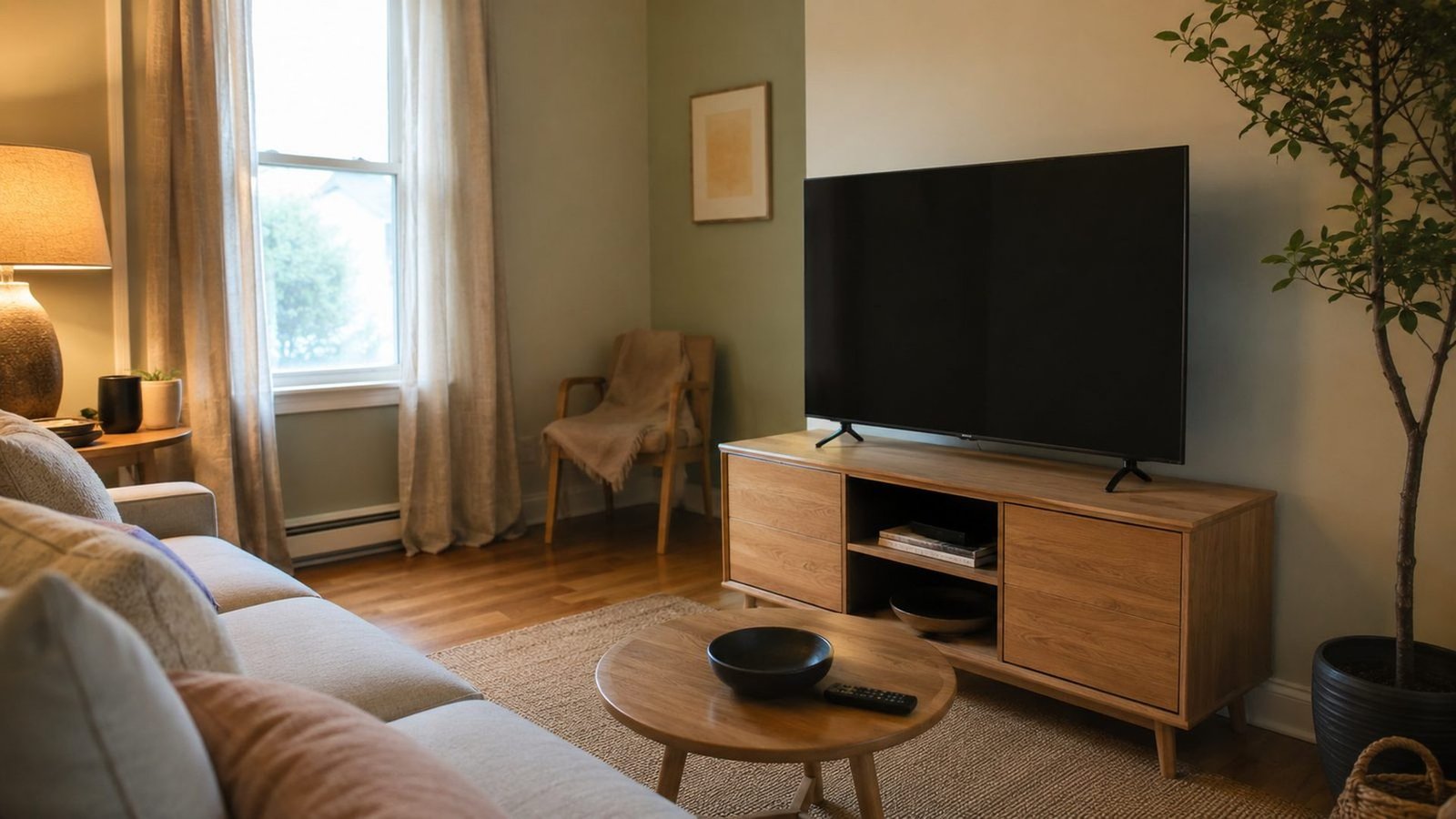
- Keep TV stand depth at 14–16 in (36–41 cm) for freestanding 55–65 in class sets so feet land fully on the top.
- Skip budget 11–12 in (28–30 cm) shallow stands that push the panel into a front overhang and raise tip risk.
- Leave room for cable bend: often about 2–4 in (5–10 cm) of air behind the stand when the wall is tight, plus the stand depth itself.
- Preserve about 36 in (91 cm) clear walk path in front of the stand in a small rental living room.
- Freestanding only when the lease forbids holes. Skip wall mount here. Soft cable hide lives in hide TV wires rental; screen center ~42 in lives in TV height above a console.
- Pair the depth recipe with layouts from small living room ideas with a TV and circulation from arrange furniture in a small living room.
Why does TV stand depth matter in a rental?
A shallow stand looks tidy in a product photo. On a real rental floor it becomes an overhang problem. The TV feet need a full landing pad. If the top is only 11–12 in (28–30 cm) deep and the panel’s foot spread wants more, the screen leans into the room, the center of gravity moves forward, and a bump from a vacuum or a hip becomes a tip story you do not want.
Depth also decides cable honesty. HDMI and power need a gentle bend behind the set. Pinch them between a shallow cabinet and the wall and you get stiff plugs or a stand that never sits flush. A calm tv stand depth rental plan is deposit math and daily walk math, not a shopping list of black gloss boxes.
AdSense-safe kit only: tape measure, painter tape for mock footprints, a level or phone level, felt pads for the stand feet, and soft cable covers that do not cut into walls. This is furniture layout, not electrical work. Soft hide habits stay in the hide-wires guide.
How deep should a TV stand be for a 55–65 in freestanding set?
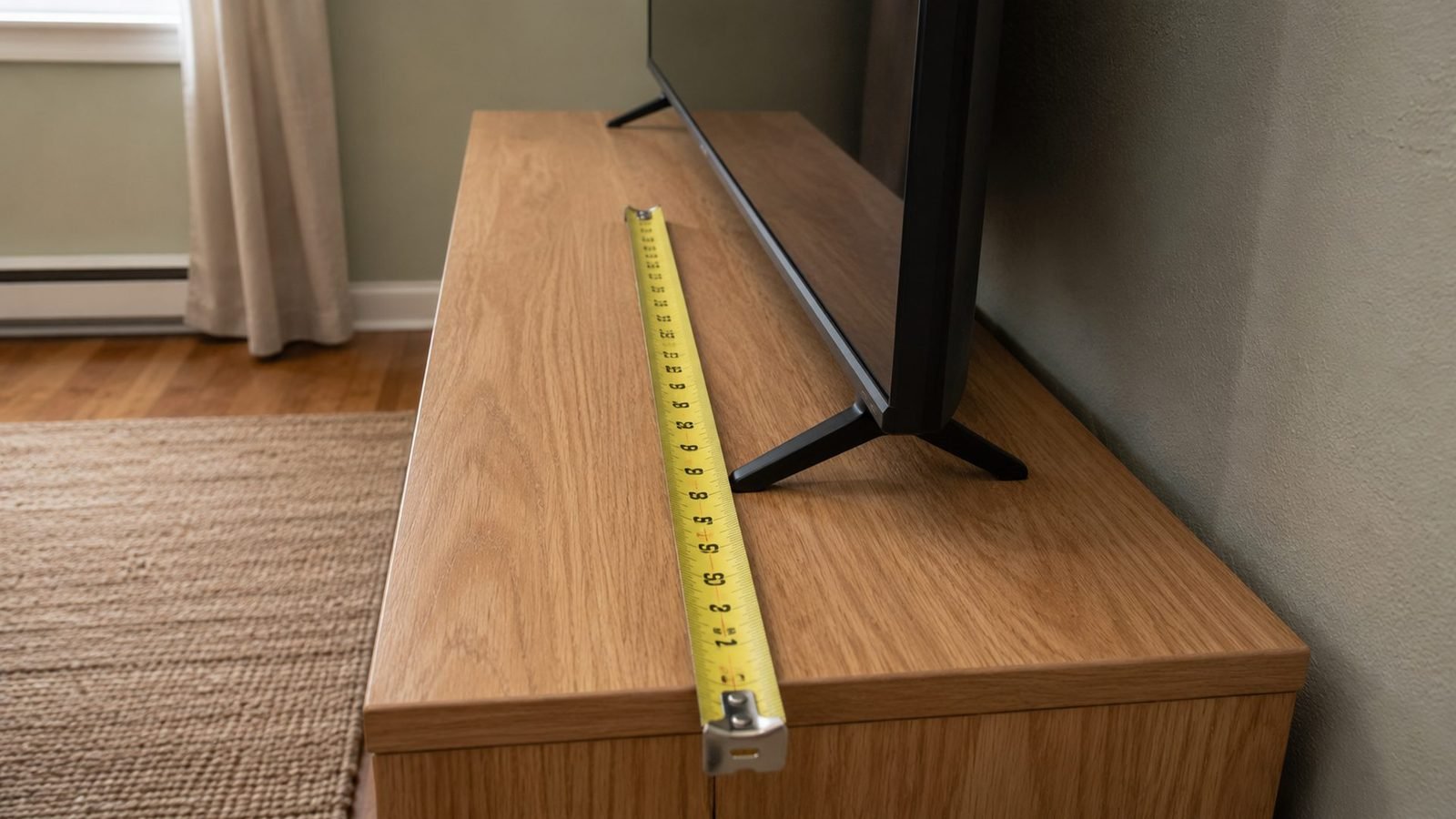
Keep usable top depth at 14–16 in (36–41 cm) for freestanding 55–65 in class TVs. Usable depth means the flat landing area from the front edge toward the wall, not a decorative lip or a hollow cable slot.
That range gives most modern feet a full seat and still leaves a rear strip for plugs to curve. Many media cabinets marketed as “slim” land at 11–13 in (28–33 cm). Those can work for a soundbar shelf or a small monitor. They are the skip when the TV itself must rest on the top without a wall mount.
If your set’s foot plate is unusually deep, tape the foot outline on the stand before you commit. The entire foot (or both feet) should sit inside the top with a little margin, not hanging past the front edge. When the lease allows no holes, freestanding depth is the safety layer that wall brackets usually pretend to own.
Why skip 11–12 in shallow stands?
Skip budget 11–12 in (28–30 cm) shallow stands for 55–65 in freestanding TVs. The skip is about overhang and tip risk, not about taste.
A shallow top forces the panel forward so the screen clears the cabinet face or so cables can exit. That front overhang moves weight into the room. On carpet or slightly uneven rental floors the stand can rock. On hard floors a person brushing past becomes a lever.
Shallow stands also crowd the wall. Plugs sit at harsh angles. Keep 14–16 in (36–41 cm) so the TV can sit centered and calm. If you already own an 11–12 in piece, use it for a soundbar, a console shelf, or a non-TV role. Do not park a large freestanding panel on it.
How much clearance do you need behind the stand for cables?
Plan for cable bend honesty, not zero gap. When the wall is tight, leave about 2–4 in (5–10 cm) of air behind the stand so plugs and HDMI can curve without pinching. That air is in addition to the stand’s own depth. A 15 in (38 cm) deep stand shoved hard against drywall still starves the rear ports.
Pull the stand forward those few inches, dress cords down the back, and use soft covers along the baseboard when outlets sit beside the unit. Power and HDMI should arc into that air gap, then run sideways to the outlet. Skip stuffing thick bricks into a sealed cubby. A rear cable notch helps only if the top depth is still 14–16 in (36–41 cm).
The hide-wires guide owns the soft, AdSense-safe cable path. This spoke only asks you not to crush plugs in a shallow depth sandwich. Skip hardwired electrical work when the lease forbids holes. Decor Pause stays on furniture geometry here.
How much walk path should sit in front of the stand?
Preserve about 36 in (91 cm) of clear walk path in front of the stand in a small rental living room. Measure from the front of the stand (or the front of the TV feet if they sit flush) to the next obstacle: sofa, ottoman, or door swing.
Thirty-six inches matches the calm circulation target used across Decor Pause small-room guides. If the room is brutal, you can live with a short pinch near 32 in (81 cm), but treat 36 in (91 cm) as the keep goal. Pair with arrange furniture in a small living room and make a small room look bigger so depth choices do not fight the sofa and rug plan.
A deeper stand is not automatically a walkway thief. A 16 in (41 cm) stand with the TV fully on top often uses less real-room depth than a 12 in (30 cm) stand plus a 3–4 in (8–10 cm) front overhang. Measure the full occupied depth, not the marketing label on the box.
How does stand depth differ from TV height above a console?
Depth and height are different jobs. This guide owns usable top depth, front overhang keep-vs-skip, rear cable air, and the walk path in front. The live TV height above a console guide owns sitting eye-line near 42 in (107 cm) to screen center, a 4–8 in (10–20 cm) gap from console top to TV bottom when you stack, and the skip-wall-mount freestanding height recipe.
Do not retarget height here. If someone asks how high the stand should be, answer console furniture height briefly, then send them to the height URL for screen center. Solve depth first so the set is safe on the top, then tune height with the dedicated guide.
A console behind the sofa is another sibling. Style a console behind a small sofa owns shallow behind-sofa depth for lamps and trays. Do not use that 12 in behind-sofa recipe as permission for an 11–12 in TV landing pad facing the seating. Different wall, different job.
What width and footprint should you check before you buy?
Depth is the locked claim here, but width still matters so the feet land inside the top. Choose a stand at least as wide as the TV’s foot spread, and ideally close to the panel width. For many 55 in class sets that means a top near 48–60 in (122–152 cm) wide; for many 65 in class sets, closer to 56–65 in (142–165 cm). Verify foot spacing on your model sheet rather than trusting a vague “fits up to 65 in” badge alone.
Tape a painter-tape rectangle on the floor: stand depth by stand width. Sit on the sofa. Walk the 36 in (91 cm) path. If the tape already fails, a prettier wood finish will not save the layout. Closed cabinets feel calmer than open wire racks in small rentals, the same quiet idea behind small living room ideas with a TV. Open shelves can work if the depth still hits 14–16 in (36–41 cm) and the top is a solid landing pad.
How do you measure depth and overhang with a tape?
Friday evening: measure the TV foot plate front to back and the candidate stand’s usable top from front edge toward the wall. If usable depth is under 14 in (36 cm) for a 55–65 in freestanding set, skip that candidate.
Saturday morning: place the empty stand. Leave 2–4 in (5–10 cm) off the wall if plugs need the bend. Tape the foot outline on the top. Confirm no front overhang. Measure stand front to sofa for the ~36 in (91 cm) walk. Adjust the rug so the path stays clear; rug help lives in rug size for a small living room.
Saturday midday: set the TV with a second person if the panel is heavy. Confirm both feet sit fully on the top, the screen is centered, and the stand does not rock. Add felt pads if needed. Soft-dress cables only after the set is stable. Soundbars belong on the stand only when they do not steal the TV foot zone; if a bar forces overhang, move it to a lower shelf.
Saturday evening: sit in the main seat. If screen center feels high or low, fix height with the TV-height guide, not by buying a shallower stand. Lighting layers stay in rental lighting stack; a floor lamp beside the stand should not steal the 36 in (91 cm) walk.
When should you keep a deeper stand vs a shallow console?
Keep a 14–16 in (36–41 cm) deep media stand when a freestanding 55–65 in TV must live on top and the lease skips wall mounts. Keep a shallower console only for non-TV jobs: behind a sofa, under a window for lamps, or as a display shelf that never carries a large panel.
In a dark apartment, a deeper wood stand in a warm tone can read calmer than a skinny black tower. Soft bounce light ideas live in decorate a dark apartment. A warm grey sofa facing the stand still needs the walk path; sofa color help lives in warm grey rental sofa. If coffee-table depth fights the TV walk, revisit storage ottoman vs coffee table so the center of the room yields the 36 in (91 cm) pass.
What should you keep, and what should you skip?
| Keep | Skip |
|---|---|
| Usable top depth 14–16 in (36–41 cm) for freestanding 55–65 in TVs | Budget 11–12 in (28–30 cm) shallow stands that force front overhang |
| Entire TV foot plate on the top with a little margin | Feet hanging past the front edge |
| ~2–4 in (5–10 cm) air behind the stand for cable bend when the wall is tight | Shoving the cabinet flush until plugs pinch |
| ~36 in (91 cm) clear walk path in front in a small rental living room | Eating the walk with overhang plus a deep coffee table |
| Freestanding setup when the lease forbids holes | Wall mount as the default rental fix |
| Soft, AdSense-safe cable dressing along baseboards | Electrical YMYL hacks, splices, or cutting into walls |
| Depth recipe here; height recipe on the TV-height guide | Re-owning 42 in screen center inside this depth spoke |
| Painter-tape footprint test before you buy | Trusting “fits up to 65 in” badges without foot measurements |
The keep list protects the set, the walk, and the deposit. Vendor depth charts that push ultra-shallow fashion consoles often skip the overhang chapter. This tv stand depth rental guide optimizes for feet fully on top, cable bend air, and a walk you can still use.
How does this fit with other rental TV guides?
This spoke is about stand depth, overhang keep-vs-skip, rear plug air, and the front walk path. Screen-center height and the 4–8 in console gap live in the TV-height guide. Soft cord paths live in hide TV wires. Room layouts live in small living room ideas with a TV and arrange-furniture. Behind-sofa consoles stay in the console-behind-sofa guide. Do not mash every TV claim into one overloaded post.
The measured claim here is simple on purpose: keep 14–16 in (36–41 cm) of usable depth for freestanding 55–65 in class TVs, skip 11–12 in (28–30 cm) overhang stands, leave cable bend space behind, and preserve about 36 in (91 cm) walk in front. Keep each claim in its lane so Search and AI overviews can cite a clean answer.
FAQ
How deep should a TV stand be?
Keep about 14–16 in (36–41 cm) of usable top depth for a freestanding 55–65 in class TV so the feet sit fully on the stand and cables can bend behind without pinching. Skip shallower tops when the panel must rest on the furniture without a wall mount.
How much depth do you need behind a TV stand?
Plan the stand’s own depth plus cable air. When the wall is tight, leave about 2–4 in (5–10 cm) behind the stand so HDMI and power can curve to the outlet without crushing plugs. Soft dressing along the baseboard is enough for most rentals; skip hardwired electrical work.
What’s the right height for a TV stand?
Console furniture height is only half the story. For sitting viewing, aim the screen center near 42 in (107 cm) from the floor and leave a calm gap above the console top when you stack. That height math lives in the live TV height above a console guide. This depth guide does not re-own screen height.
Should renters keep a 14–16 in deep stand and skip 11–12 in overhang stands?
Yes. Keep 14–16 in (36–41 cm) so a freestanding 55–65 in TV lands fully on the top. Skip budget 11–12 in (28–30 cm) shallow stands that force a front overhang and raise tip risk, especially when the lease forbids a wall mount.
How much walk path should you keep in front of a rental TV stand?
Aim for about 36 in (91 cm) of clear walk path in front of the stand in a small rental living room. Measure occupied depth including any panel overhang, then protect the pass to the sofa or doorway so the TV wall does not steal circulation.
Related: TV height above a console · hide TV wires rental · small living room ideas with a TV · style a console behind a small sofa · arrange furniture in a small living room · rental lighting stack · rug size for a small living room · make a small room look bigger · decorate a dark apartment · storage ottoman coffee table rental · warm grey rental sofa